

Mollusks are the second-largest animal phylum, with over 100,000 species.The mollusks include many familiar animals, such as clams, snails, slugs, and squid, as well as some less familiar ones, like tusk shells and chitons. Mollusks are found in nearly all freshwater and marine environments, and some are also on land.
Mollusks have a wide variety of food strategies, including herbivores, carnivores, predators, filter feeders, detritivores, and even some parasites, which are of great ecological importance due to their trophic relationships. They also have great ecological importance, since they are the link between pelagic and benthic processes, because they filter organic matter and phytoplankton from the water column, and their undigested remains, expelled as mucus or pseudofeces, become part of the sediment.
Mollusks are some of the most fascinating and diverse creatures in the aquatic world, quietly shaping life beneath the water’s surface.
Mollusks are soft-bodied invertebrates that often have a hard outer shell for protection. While many people associate mollusks with shells, not all of them have one. For example, octopuses and squids lack an external shell but are still classified as mollusks.
Most mollusks share three main body parts:
Muscular foot ( used for movement)
Visceral mass (contains internal organs)
Mantle (produce the shell, if present )
This simple yet effective body plan has allowed mollusks to thrive in diverse environments for millions of years.

Mollusks are soft-bodied, highly adaptable animals found in oceans, freshwater, and even on land. Here are their main features explained in a clear and human-friendly way:
Mollusks have soft, unsegmented bodies. Their body is typically divided into three main parts:
Head ( in some species)
Muscular foot ( for movement)
Visceral mass (contains internal organs)
The mantle is a special tissue layer that:
Covers the body
Produce the shell ( if present)
Helps in respiration
The mantle cavity, a fold in the mantle, occupies a significant volume. It is lined with epidermis and, according to habitat, exposed to the sea, freshwater, or air. The cavity was at the rear in the earliest mollusks, but its position now varies from group to group. The anus, a pair of osphradia ( chemical sensors) in the incoming “lane”, the hindmost pair of gills, and the exit opening of the nephridia ( kidneys) known as “Organs of bojanus” and gonads ( Reproductive organs) are in the mantle cavity.
Most mollusks have a hard external shell made of calcium carbonate. The shell protects them from predators, environmental damage, and dehydration. Shells may be single, double, internal, or absent depending on the species.
Types of Shells:
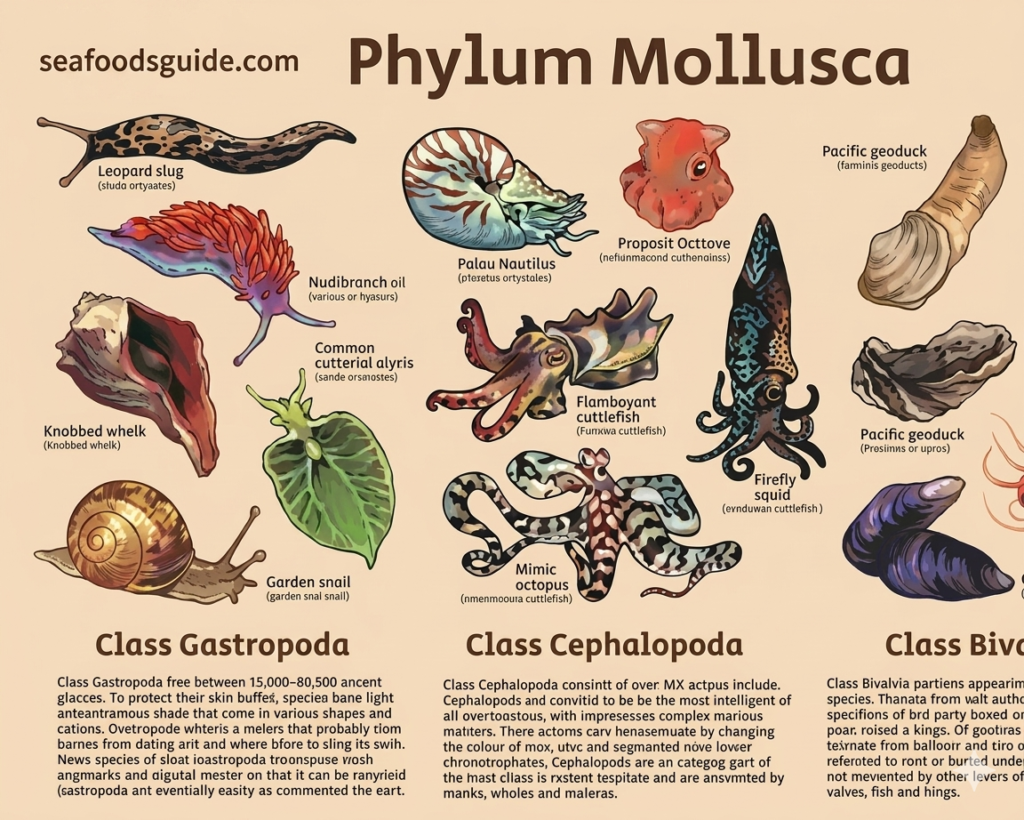
Single shell: Found in snails
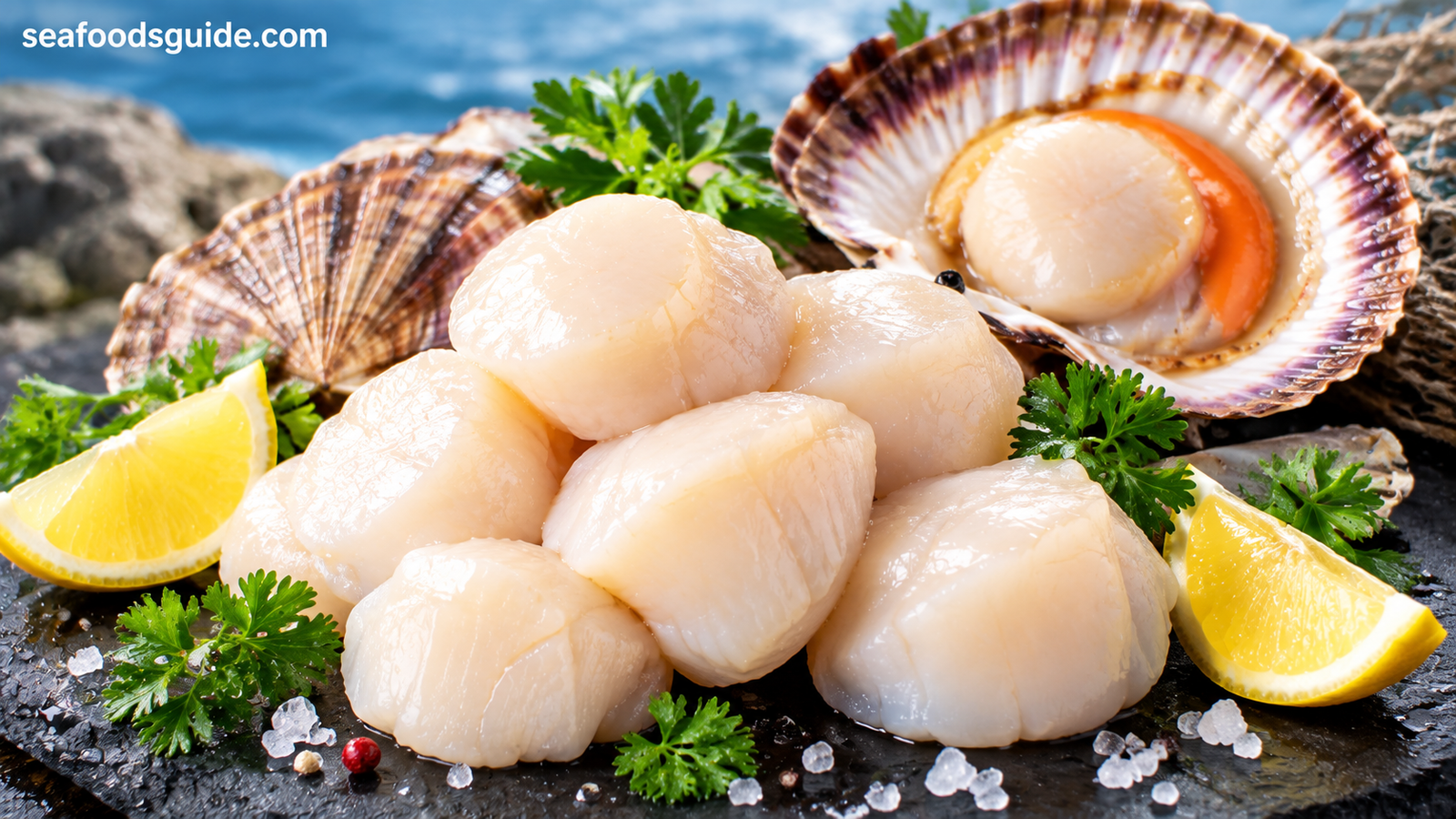
Double shell: Found in clams and oysters
Internal shell: Found in squids
No shell: Found in octopuses and slugs
The shell is secreted by a body covering called the mantle.
A muscular foot is one of the main features of Mollusks. It is used for movement, attachment, digging, swimming, or capturing prey.
Functions of the Foot
Crawling in snails
Digging for clams
Swimming in cephalopods
Holding onto surfaces in oysters
The foot varies greatly in shape and function among different mollusks.
Most mollusks have a radula, a ribbon-like structure with tiny chitinous teeth used for feeding. It helps scrape algae, cut food, or drill into surfaces.
Functions of the Radula :
Capturing prey
Scraping food from rocks
Cutting plants material
However, bivalves such as clams and oysters do not possess a radula because they are filter feeders.
Aquatic mollusks use gills
Some land mollusks ( like snails) use a lung-like structure
Most mollusks have an open circulatory system, where:
Blood flows freely in the body cavities
Cephalopods are an exception ( they have a closed system )
Cephalopods such as squids and octopuses have a closed circulatory system, which is more efficient and supports active movement.
Nervous System:
Simple in clams and snails
Highly developed in cephalopods ( like octopus ), making them very intelligent
The Nervous System of Mollusks consists of ganglia connected by nerve cords. Sensory organs may include:
Tentacles
Statocysts for balance
Chemoreceptor
Most mollusks reproduce sexually. Fertilization may be external or internal, depending on the species.
Reproductive characteristic
Separate sexes in many species
Egg-laying behavior
Larval stages in aquatic species
Their life cycle may include larval forms such as trochophore and veliger larvae.
Mollusks can live in:
Oceans (marine)
Rivers and lakes (freshwater)
Land (terrestrial environments)
Mollusks are found in marine, freshwater, and terrestrial habitats around the world.
Oceans
Rivers
Lakes
Moist forests and gardens
Mollusks generally show bilateral symmetry, meaning the body can be divided into two equal halves along a single plane. This body arrangement helps in organized movement and proper functioning of organs.
The visceral mass contains most internal organs, including:
Digestive organs
Heart
Kidneys
Reproductive organs
It is located above the muscular foot and is usually covered by the mantle.
Mollusks use different respiratory organs depending on their habitat.
Aquatic species breathe through gills called ctenidia.
Land mollusks use lung-like structures or the mantle cavity for respiration.
This adaptation allows mollusks to survive in oceans, rivers, lakes, and on land.
Mollusks have a complete digestive tract with:
Mouth
Esophagus
Stomach
Intestine
Anus
Their feeding habits vary widely:
Herbivores
Carnivores
Scavengers
Filter feeders
This diversity helps mollusks occupy many ecological niches.
Most mollusks reproduce sexually. Fertilization may be external or internal, depending on the species.
Separate sexes in many species
Hermaphroditism in some snails and slugs
Egg-laying behavior
Larval stages in aquatic species
Their life cycles may include larval forms such as trochophore and veliger larvae.
Mollusks have great importance for humans and ecosystems.
Seafood source
Pearl production
Jewelry and decoration
Scientific research
Aquarium trade
Water filtration
Food source for animals
Maintenance of aquatic ecosystems
Because of their ecological and economic value, mollusks are among the most important invertebrate groups in the world.
Mollusks do not use hemoglobin. Their blood utilizes a copper-based protein called hemocyanin, which turns bright blue when oxygenated.
Highly advanced cephalopods like squids and octopuses possess three separate hearts. Two branchial hearts pump blood exclusively to the gills, while one systemic heart circulates blood to the rest of the body.
Most mollusks feed using a specialized, sandpaper-like tongue ribbon called a radula. Some species have radula teeth reinforced with magnetite, making them hard enough to scratch glass.
Certain marine bivalves, including specific types of oysters, display sequential hermaphroditism, meaning they can alternate their biological sex from one year to the next.
While many small slugs squids live for only a few months, deep-sea bivalves ocean quahog can survive for more than 500 years.
Cephalopods exhibit a level of neurological complexity that is unique among invertebrates. Octopuses possess massive nerve networks, use tools, and display advanced learning and problem-solving skills in laboratory tests.
Mollusks have been discovered surviving at the absolute deepest point on Earth, the Challenger Deep inside the Mariana Trench, at depths of roughly 36,000 feet.
Mollusks belong to the phylum Mollusca, which is one of the largest groups of invertebrate animals in the world. Scientists have identified more than 85,000 living species, and many more fossil species have been discovered. Mollusks are found in oceans, rivers, lakes, forests, and even deserts.
This group includes:
Snails
Slugs
Clams
Mussels
Oysters
Squids
Octopuses
Cuttlefish
Their incredible diversity makes them one of the most successful animal groups on Earth.
Octopuses are among the smartest invertebrates in the animal kingdom. They possess highly developed brains and complex nervous systems. Scientists have observed octopuses:
Solving puzzles
Opening jars
Escaping aquariums
Using tools
Recognizing human faces
They can also learn from experience and remember solutions to problems. Their intelligence is comparable to that of some vertebrate animals. An octopus has eight flexible arms covered with suction cups that help it sense objects, taste food, and manipulate tools.
Pearls are formed inside oysters and some mussels. When a tiny particle or parasite enters the shell, the mollusk protects itself by covering the irritant with layers of a shiny substance called nacre. Over time, these layers build up and form a pearl.
Natural pearls are rare
Cultured pearls are produced in pearl farms
Pearls are used in jewelry worldwide
Pearl oysters are economically valuable
Pearl production is an important industry in many countries.
The giant squid is one of the largest invertebrates on Earth. Some giant squids can grow over 40 feet (12 meters) long, including their tentacles.
These mysterious creatures live deep in the ocean where sunlight cannot reach. Because of their deep-sea habitat, giant squids were rarely seen by humans for many years.
Huge eyes for seeing in the darkness
Long feeding tentacles
Powerful beak for tearing prey
Fast swimming ability
They mainly feed on fish and smaller squids.
Land snails can enter a dormant condition called estivation during hot or dry weather. In this state, they reduce body activity and conserve moisture. Some snails have been known to survive for up to three years without food by remaining dormant. This adaptation helps them survive harsh environmental conditions.
Unlike humans, many mollusks have blue blood. This is because their blood contains hemocyanin, a copper-based molecule used to transport oxygen.
Humans use iron-based hemoglobin → red blood cells
Use copper-based hemocyanin → blue blood
Blue blood works efficiently in cold and low-oxygen aquatic environments.
Certain mollusks, such as octopuses, squids, and cuttlefish, can rapidly change their body color and skin texture.
They use special pigment cells called chromatophores to:
Camouflage themselves
Hide from predators
Communicate
Hunt prey
Some species can match rocks, coral, or sand almost perfectly within seconds.
Some clam species live for hundreds of years. The ocean quahog clam is one of the longest-living animals known. Scientists discovered a clam estimated to be more than 500 years old. Clams grow slowly, and their shells form growth rings similar to tree rings, which help scientists estimate their age.
Many bivalves, such as oysters and mussels, are filter feeders. They pull water through their bodies and remove:
Dirt particles
Algae
Bacteria
Organic waste
A single oyster can filter large amounts of water every day, helping maintain healthy aquatic ecosystems. Because of this, mollusks are considered natural water purifiers.
Cone snails are beautiful marine mollusks with patterned shells, but they are also venomous predators. They use a sharp, harpoon-like tooth to inject venom into prey such as fish and worms. Some cone snail species can seriously harm humans. Scientists are studying cone snail venom because certain chemicals in it may help develop powerful pain medicines.
Mollusks are ancient animals that have existed for more than 500 million years. Fossil evidence shows that mollusks lived in Earth’s oceans long before dinosaurs appeared. Their long evolutionary history has allowed them to develop many unique adaptations for survival.
Unbelievable Squid and Octopus Facts:
Three Hearts: Octopuses have three hearts: two pump blood to the gills, and one pumps it to the rest of the body.
Blue Blood: They don’t use iron-based hemoglobin as humans do. Instead, their blood contains a copper-rich protein called hemocyanin, which makes it blue and helps them survive in cold, low-oxygen environments.
Masterful Camouflage: Cephalopods (squid, cuttlefish, octopuses) can instantly change their skin’s color and texture to blend seamlessly into their surroundings or communicate with one another.
Bivalve and Gastropod Quirks
The “Radula”: Most mollusks eat using a unique, tongue-like ribbon of tiny teeth called a radula. Cone snails even use highly modified, hollow radula teeth to shoot harpoon-like venom into fish.
Accidental Jewelers: Pearls are created when an irritant (like a grain of sand) gets trapped inside a mollusk’s shell. The mantle coats the intruder in layers of narin.
Centuries of Life: Some ocean-dwelling quahog clams have lived for over 500 years, making them some of the oldest individual animals on Earth.
Colossal and Giant Squids: These are the largest invertebrates on the planet. The Giant Squid can grow up to 55 feet long.
The Opposite Extreme: At the other end of the spectrum, some marine snails and solenogasters are less than a single millimeter long

Seafood Restaurants Amsterdam Ultimate Seafood Guide 2026: Best Restaurants,...
+923288172216
seafoodsguide@gmail.com

We share helpful and educational content about seafood, covering various types of fish and shellfish, their benefits, and their role in global cuisine and nutrition. Our content is designed to be easy to understand and useful for anyone interested in seafood.
Subscribe to our newsletter to receive the latest informational content about seafood, including different types of fish and shellfish, their benefits, and useful guides. Enter your email to stay updated with our newest seafood articles.