

Standing at the seafood counter, most shoppers face the same problem. Rows of fish, shrimp, crab, and mussels all look similar, yet they belong to completely different categories with different tastes, textures, and health benefits. Understanding the types of seafood makes shopping, cooking, and eating out far less confusing.
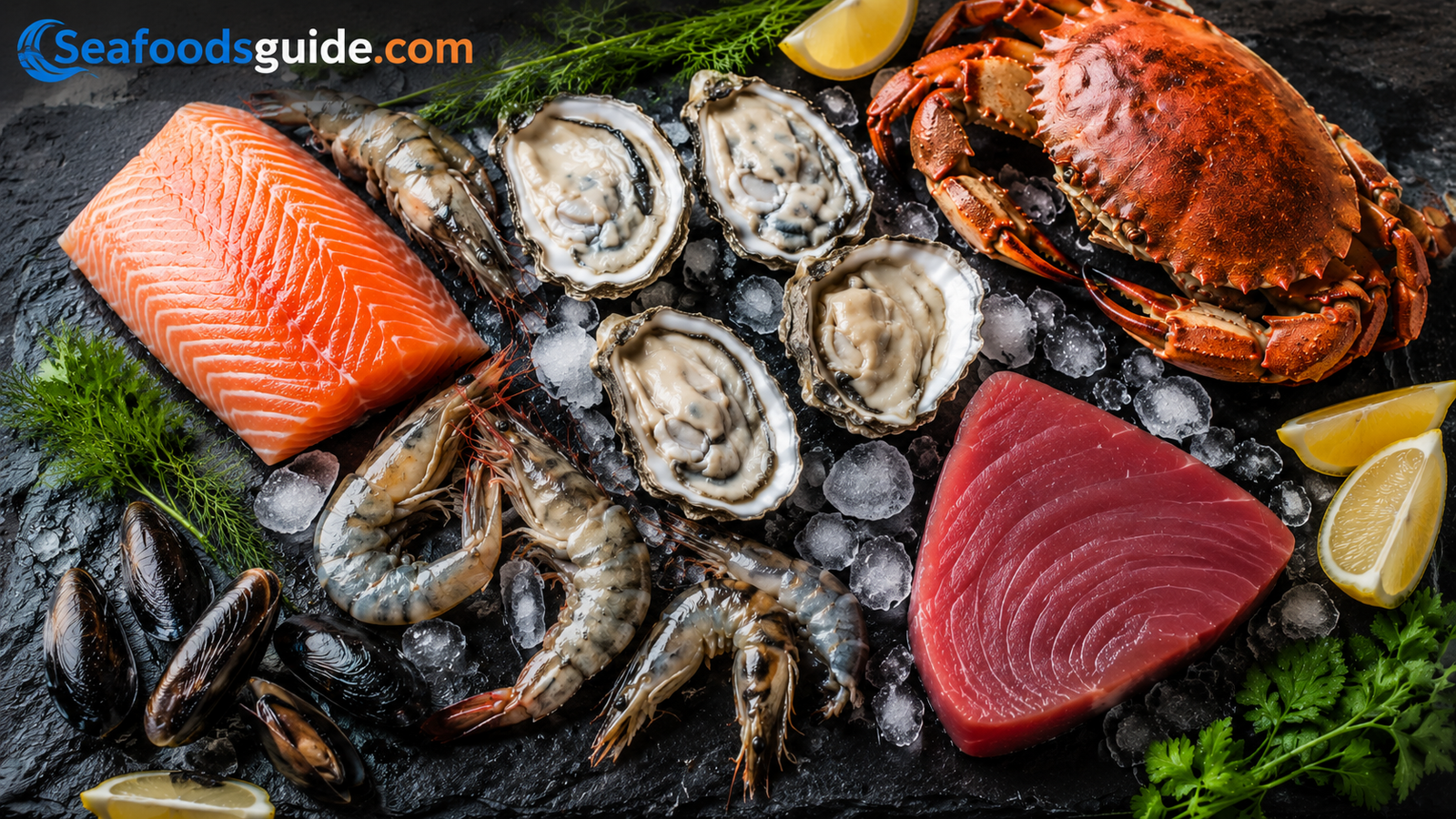
Seafood is a broad term for edible aquatic animals harvested from oceans, rivers, and lakes. It splits into two major groups: finfish, which includes species like salmon and tuna, and shellfish, which covers crustaceans such as shrimp and crab along with mollusks like clams and oysters. Some categories also include less common options like seaweed and roe.
This guide breaks down each major category in plain language, explains how professionals classify seafood, and highlights the nutritional differences that matter most. By the end, readers will know exactly what separates a crustacean from a mollusk, which types of seafood offer the most protein, and how to pick fresh options with confidence.
Seafood refers to any edible aquatic animal harvested from saltwater or freshwater environments. This includes fish, crustaceans, mollusks, and certain other marine organisms that humans have eaten for thousands of years. Some definitions also extend to edible sea plants like seaweed, though the core meaning centers on animal life pulled from oceans, rivers, and lakes.
The term covers two broad origins:
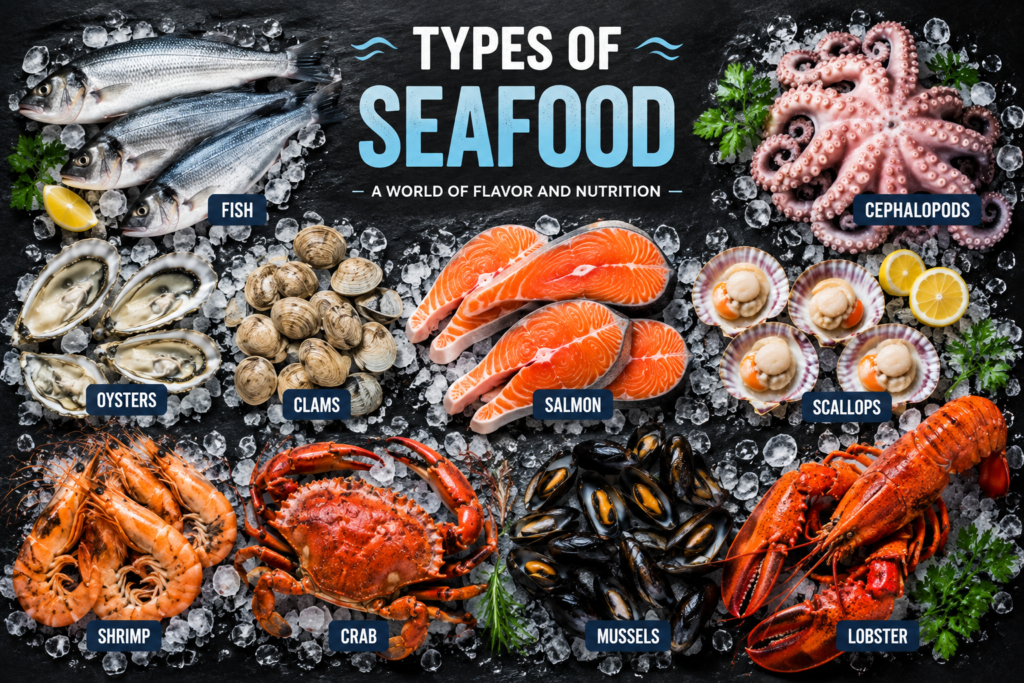
Seafood is generally classified into five main categories based on biological traits and anatomy. This classification helps determine how each type is cooked, stored, and valued nutritionally.
The primary categories include:
This classification of seafood matters beyond biology. Cooking methods, shelf life, and even allergy risks differ significantly across these groups. For example, someone allergic to shrimp may not necessarily react to fish, since crustacean and finfish allergies stem from different proteins.
Chefs and nutritionists also rely on this structure to plan balanced meals, since each category offers a distinct nutrient profile. The next sections explore each major group in more detail, starting with finfish, the most widely consumed type of seafood worldwide.
Finfish make up the largest and most familiar category of seafood. These are true fish, animals with fins, gills, and a backbone, and they are typically divided into saltwater and freshwater species.
Popular saltwater finfish include:
Freshwater finfish include species like tilapia, catfish, and trout, all known for their mild flavor and affordability compared to many saltwater options.
Finfish are further grouped by fat content into lean fish, such as cod and tilapia, and oily fish, such as salmon and mackerel. This distinction matters for both cooking and nutrition, since oily fish generally carry more omega-3 fatty acids and a stronger flavor, while lean fish work well in dishes calling for a milder taste.
In short, finfish offer some of the most versatile types of seafood available, fitting into everything from simple weeknight dinners to raw preparations like sashimi. Their wide availability and adaptable texture make them a starting point for most seafood cooking.
Shellfish is a broad category covering aquatic animals that live inside a shell or shell like covering. Unlike finfish, shellfish have no backbone, and they split into two distinct subgroups: crustaceans and mollusks.
The key difference comes down to body structure. Crustaceans have a hard, segmented exoskeleton and jointed legs, while mollusks tend to have a softer body protected by one or two shells, or in some cases no shell at all.
Common examples of shellfish include:
Shellfish allergies are among the most common food allergies, and they typically fall into two distinct categories: reactions to crustaceans and to mollusks. This means a person reacting to shrimp will not necessarily react to oysters, since the proteins involved differ between the two subgroups.
Because shellfish covers such a wide range of textures and flavors, from the briny snap of an oyster to the buttery richness of lobster, it plays a major role in global cuisine.
Crustaceans are a subgroup of shellfish defined by their hard exoskeleton, segmented bodies, and jointed appendages. Most crustaceans live in saltwater, though a few species, like crawfish, thrive in freshwater environments.
The most widely eaten crustaceans include:
Crustaceans generally cook quickly and turn a bright red or orange color when done, a visual cue many home cooks rely on for doneness. Their meat tends to be firm and slightly sweet, which is why they pair well with butter, garlic, and citrus-based sauces.
From a nutritional standpoint, crustaceans are typically low in fat and high in protein, though shrimp and lobster do contain moderate cholesterol levels compared to lean finfish. This makes portion size worth considering for anyone monitoring cholesterol intake.
Crustaceans remain one of the most recognizable types of seafood, largely due to their presence in classic dishes like shrimp scampi, crab cakes, and lobster rolls.
Mollusks make up the second major subgroup of shellfish, distinguished by their soft, unsegmented bodies. A hard shell protects most mollusks, though one branch of this family, cephalopods, has adapted differently.
Mollusks are typically split into two categories:
Bivalves are often eaten raw, as with oysters on the half shell, or lightly steamed, as with mussels and clams. Scallops stand out among bivalves for their firm, sweet meat, which sears well and holds up to high heat cooking.
Cephalopods offer a very different eating experience. Squid, often served as calamari, has a mild flavor and chewy texture when overcooked, while octopus requires slow cooking or careful preparation to become tender. Both are staples in Mediterranean and East Asian cuisine.
Nutritionally, mollusks tend to be rich in zinc, vitamin B12, and iron, making bivalves in particular a strong option for anyone looking to diversify their seafood intake beyond fish and crustaceans. Their unique textures and preparation methods make mollusks one of the more adventurous types of seafood for home cooks to explore.
Beyond finfish and shellfish, several other aquatic foods fall under the broader seafood umbrella. These items are less common in everyday cooking but still hold cultural and nutritional importance.
Notable examples include:
While seaweed is technically a plant rather than an animal, it is frequently grouped with seafood due to its marine origin and its regular appearance on seafood menus and sushi platters.
These lesser-known types of seafood tend to carry strong nutritional profiles. Seaweed, for instance, is a natural source of iodine, while roe delivers a concentrated dose of omega-3 fatty acids and protein in small servings.
Though not staples in the average American diet, these items are gaining more attention as interest grows in diverse, sustainable seafood options and global cuisine continues to influence home cooking.
Seafood is widely recognized as one of the healthiest protein sources available, though nutritional value varies significantly across categories. Understanding these differences helps shoppers choose seafood that fits their specific health goals.
Finfish, especially oily varieties like salmon and mackerel, are among the richest natural sources of omega 3 fatty acids. These fats support heart and brain health and are difficult to obtain in sufficient amounts from other common foods. Lean finfish like cod and tilapia offer high protein with minimal fat, making them a popular choice for anyone watching calorie intake.
Crustaceans such as shrimp and crab are naturally low in fat and calories while still delivering a strong protein punch. They do carry more cholesterol than most finfish, so portion control matters for individuals managing cholesterol levels.
Mollusks bring a different nutritional strength to the table. Bivalves like oysters and clams are exceptionally high in zinc, iron, and vitamin B12, nutrients that are harder to source from plant based foods.
Across nearly all categories, seafood tends to be lower in saturated fat than red meat while offering complete protein, making the different types of seafood a valuable addition to a balanced diet.
Picking the right seafood starts with knowing what freshness looks and smells like, since quality varies by category and affects both safety and flavor.
For finfish, fresh fillets should have firm flesh, a mild ocean smell, and clear, bright eyes if buying whole fish. Any strong, sour, or ammonia-like odor signals the fish has passed its prime. Fresh fillets should also spring back when pressed rather than leaving a dent.
For crustaceans, look for shrimp with firm bodies and a translucent shell, and avoid any with black spots or a strong fishy smell. Live crab and lobster should move when handled, since seafood from this category is often sold live to guarantee freshness.
For mollusks, live clams, oysters, and mussels should have tightly closed shells or close when tapped. Any shell that stays open is a sign the animal has died and should not be eaten.
Storage guidelines also differ by type:
Following these category-specific tips helps ensure any type of seafood stays safe, fresh, and flavorful from store to table.
+923288172216
seafoodsguide@gmail.com

We share helpful and educational content about seafood, covering various types of fish and shellfish, their benefits, and their role in global cuisine and nutrition. Our content is designed to be easy to understand and useful for anyone interested in seafood.
Subscribe to our newsletter to receive the latest informational content about seafood, including different types of fish and shellfish, their benefits, and useful guides. Enter your email to stay updated with our newest seafood articles.