


Welcome to my website. This article includes a complete guide to fish.
Standing at the seafood counter, unsure what half the labels even mean, is a common problem. Shoppers want something fresh, healthy, and worth the price, but the options feel overwhelming. Saltwater seafood solves that confusion once you understand it. It refers to any fish or shellfish harvested from oceans and seas rather than rivers or lakes, including familiar choices like salmon, shrimp, and oysters, along with lesser-known options like sea urchin and octopus. This guide breaks down every major type of saltwater seafood, explains its nutritional value, and covers how to buy, store, and cook it safely. You will also learn which species carry mercury risks and which ones are considered sustainable choices backed by NOAA and FDA guidance.
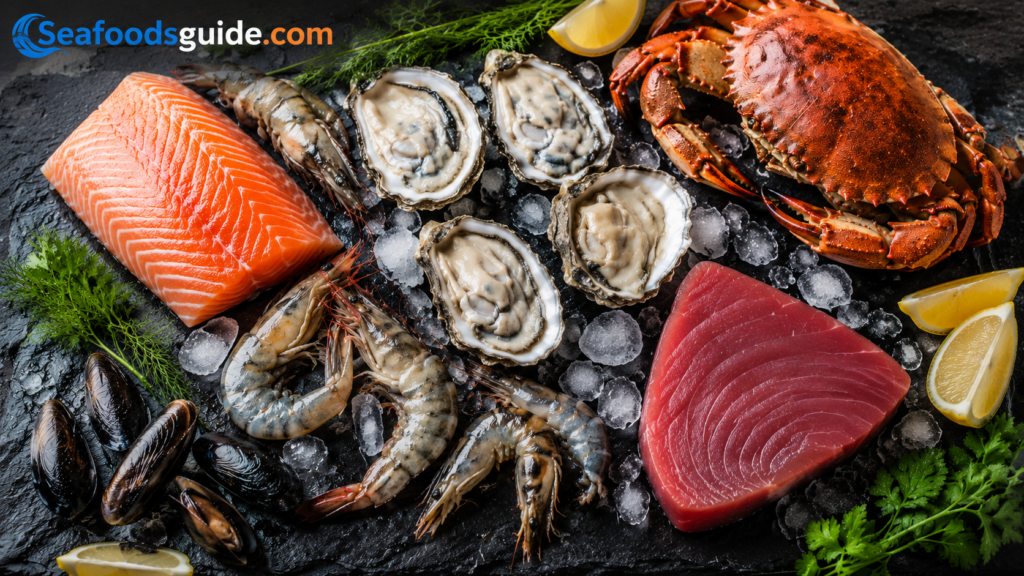
Saltwater seafood is any fish or shellfish caught or farmed in oceans, seas, and other marine environments. This includes finfish like tuna and salmon, along with shellfish such as shrimp, crab, oysters, and clams. The defining factor is habitat, not flavor or texture.
Marine environments cover more than 70% of the earth’s surface, giving saltwater species access to a far larger and more varied food supply than freshwater fish. That diet, built on algae, plankton, and smaller marine organisms, directly shapes the nutritional profile of what ends up on your plate.
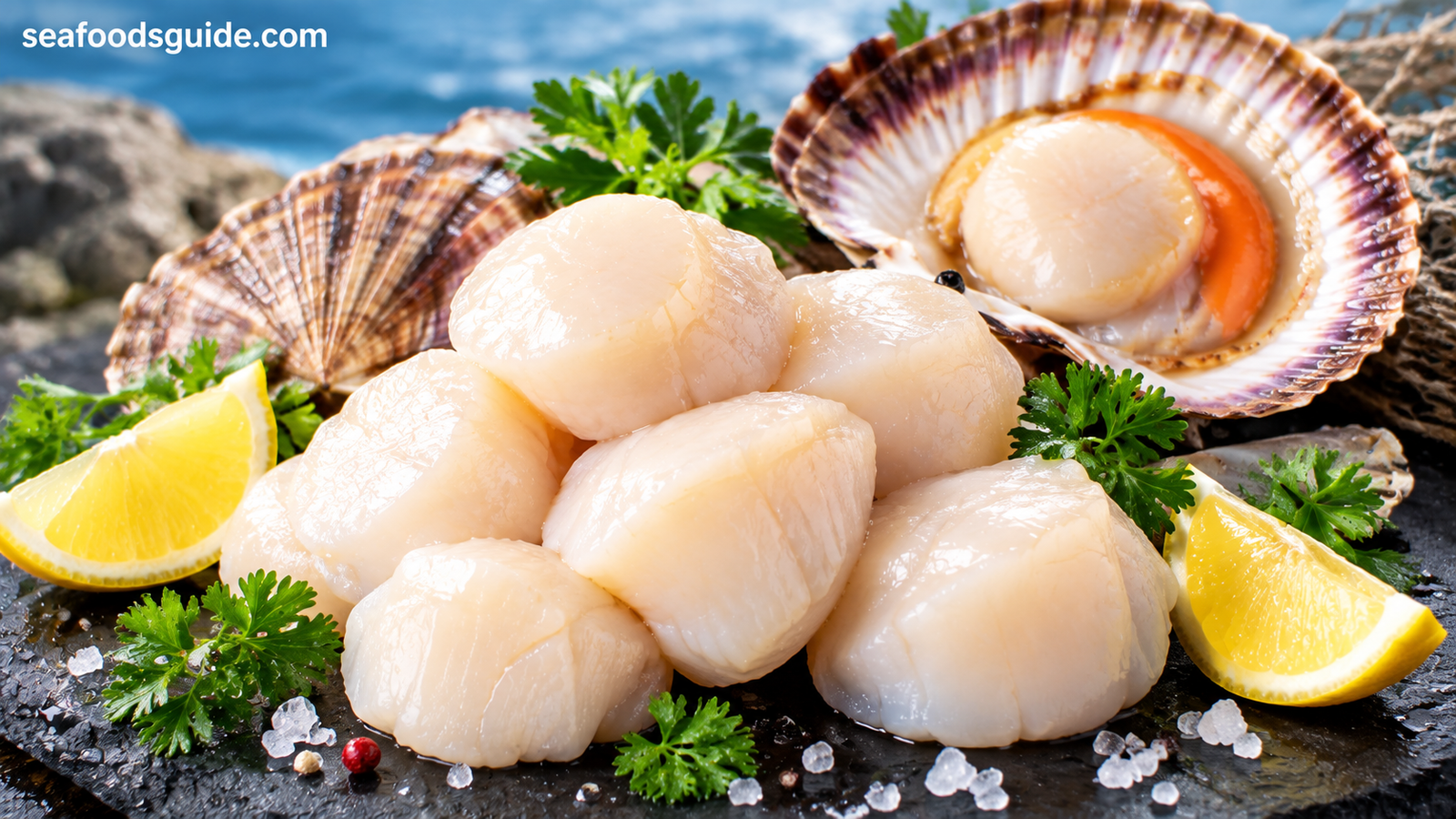
Saltwater seafood generally falls into four broad categories:
In the United States, seafood consumption has steadily grown as more people prioritize lean protein and omega-3-rich diets.
The core difference comes down to where the animal lives. Saltwater seafood comes from oceans and seas, while freshwater seafood comes from rivers, lakes, and streams.
This habitat difference affects taste, texture, and nutrition. Saltwater species typically contain higher levels of omega-3 fatty acids and iodine, since these compounds are more concentrated in marine food chains. Freshwater fish, on the other hand, often carry lower mercury levels and a milder flavor.
Neither option is universally better. The right choice depends on your health priorities, local availability, and how the seafood was sourced.
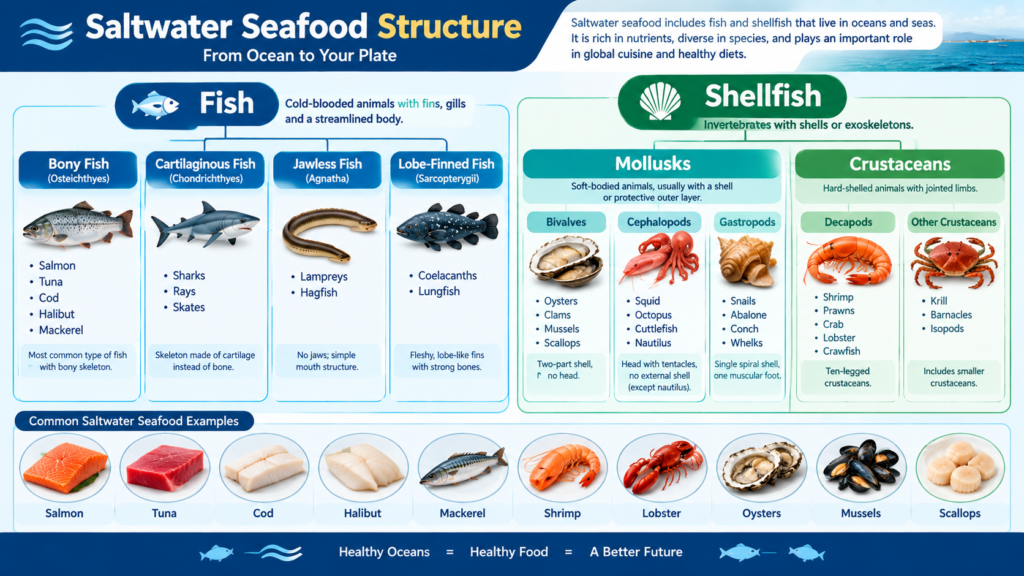
Saltwater seafood is one of the most nutrient-dense protein sources available. A typical serving delivers lean protein, essential vitamins, and minerals that are harder to find in comparable quantities elsewhere in the diet.
The standout nutrient in saltwater seafood is omega-3 fatty acids, specifically EPA and DHA. These fats support heart health, brain function, and reduced inflammation. The World Health Organization recommends 200 to 500 milligrams of combined EPA and DHA daily, an amount easily reached with two servings of fatty fish per week. The USDA Dietary Guidelines for Americans recommend at least 8 ounces of seafood weekly for the same reasons.
Beyond omega-3s, saltwater seafood offers:
The reason saltwater species are especially rich in these nutrients traces back to their diet. Marine algae and plankton are natural sources of omega-3s, and these compounds concentrate as they move up the ocean food chain, from small forage fish to larger predators like tuna.
Some saltwater seafood contains mercury, a natural element that accumulates in fish tissue over time and does not break down through cooking. Larger, longer living predatory species like swordfish, shark, and king mackerel carry the highest mercury levels because they sit higher on the marine food chain.
The FDA and EPA jointly publish a mercury advisory chart dividing seafood into best choices, good choices, and species to avoid. Low mercury options include salmon, shrimp, sardines, and Atlantic mackerel. Pregnant women, nursing mothers, and young children are advised to avoid high mercury species entirely and limit even moderate mercury fish to a few servings per week.
Choosing smaller, younger fish is generally a safer strategy, since mercury accumulates with age and size.
Sustainability depends heavily on how saltwater seafood is caught or farmed, not just the species itself. Two sourcing methods dominate the market, and each carries different environmental tradeoffs.
Wild-caught seafood is harvested directly from oceans and seas using methods like hook and line, trawling, or traps. When managed properly, wild fisheries can remain productive indefinitely. Farmed seafood, also called aquaculture, is raised in controlled marine environments and now supplies a large share of the seafood consumed in the United States, including much of the salmon and shrimp sold in stores.
In the U.S., seafood sustainability is closely regulated. NOAA Fisheries manages more than 500 fish stocks under the Magnuson Stevens Act, using science based catch limits to prevent overfishing. According to NOAA’s most recent Status of Stocks report, roughly 94% of stocks with known status are not currently subject to overfishing, and the overall overfishing list has dropped to an all time low.
Shoppers looking for reliable sustainability guidance can rely on a few trusted resources:
Choosing domestic, U.S. sourced saltwater seafood is generally one of the simplest ways to support well-managed fisheries, since American seafood operates under some of the strictest sustainability standards in the world.
Buying fresh saltwater seafood comes down to reading a few clear physical signals. Whether you are shopping for whole fish, fillets, or shellfish, the same core principles apply.
For whole fish, look for:
A strong fishy smell is often the clearest warning sign of aging seafood, since properly handled fish should smell like the sea, not overpowering or sour.
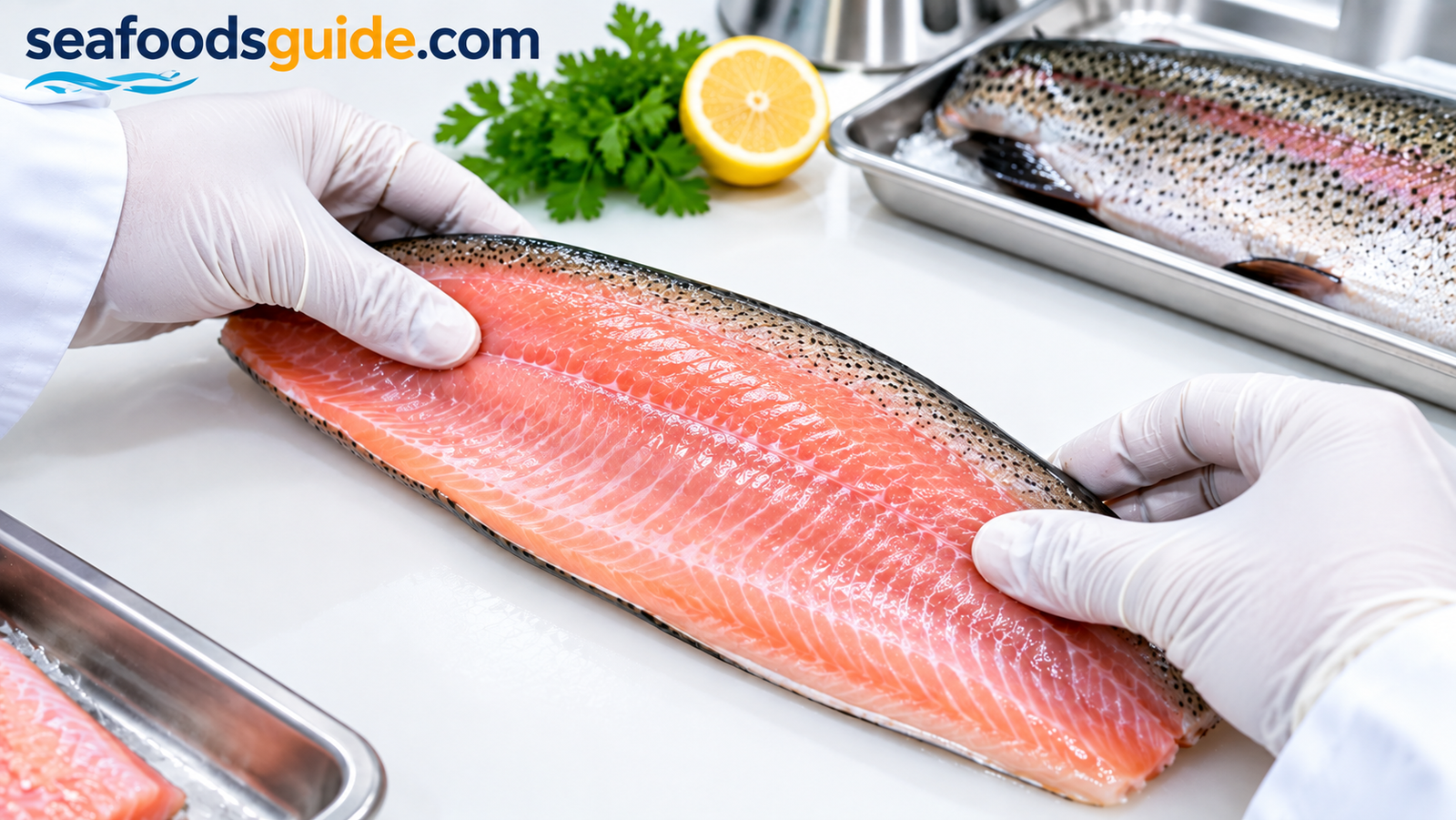
For fillets and steaks, prioritize shine and moisture over color alone, since flesh should look glossy rather than dry or grayish. For live shellfish like clams and mussels, shells should be tightly closed or close quickly when tapped, a sign the animal is still alive and safe to cook.
Frozen saltwater seafood is often just as fresh, and sometimes fresher, than unfrozen options at the counter, since many species are flash frozen at sea within hours of being caught. When buying frozen seafood, choose tightly sealed packaging with minimal ice crystals, which indicate temperature fluctuation and quality loss.
Fresh saltwater seafood should be refrigerated at 40°F or below and used within one to two days of purchase. For longer storage, wrap seafood tightly in plastic or freezer paper and freeze it, where it will typically stay safe to eat for four to six months.
Always thaw frozen seafood in the refrigerator rather than at room temperature, since slow thawing preserves texture and reduces the risk of bacterial growth.
Saltwater seafood is versatile in the kitchen, and the right cooking method often depends on the species and cut you are working with.
Common preparation methods include:
Raw seafood requires extra caution. Only fish labeled sushi grade or previously flash frozen to eliminate parasites should be eaten raw, and it should always come from a trusted supplier.
Regional traditions across the United States highlight just how diverse saltwater seafood cooking can be. Gulf Coast kitchens are known for seasoned, boiled shrimp, while the Chesapeake Bay region built an entire culinary identity around steamed blue crab with Old Bay seasoning. New England is famous for simple, butter poached lobster, and the Pacific Northwest favors wild caught salmon prepared with minimal seasoning to highlight its natural richness.
A simple rule for beginners is to match the cooking method to the fish’s fat content. Leaner fish like cod or flounder do well with moist heat methods like steaming or baking, while fattier fish like salmon and mackerel hold up better to high heat methods like grilling, since their natural oils prevent drying out.
Saltwater seafood offers something for nearly every diet and taste preference, from lean white fish to rich, buttery shellfish. Understanding the main categories, finfish, crustaceans, mollusks, and lesser known species, makes shopping and cooking far less intimidating.Nutrition and safety go hand in hand here. Prioritizing low mercury options, checking freshness signals, and choosing sustainably sourced seafood ensures you get the full health benefits without unnecessary risk.As seafood sourcing becomes more transparent and traceable, shoppers in 2026 have more tools than ever, from NOAA FishWatch to Seafood Watch ratings, to make informed decisions at the counter.The next time you shop for saltwater seafood, use what you have learned here to choose confidently, cook it properly, and enjoy one of the healthiest proteins available.That completes the full article draft across all sections. Let me know if you'd like me to:Assemble the complete article into a single clean document (with metadata, title options, and full body combined)Run the final quality checklist against the completed draftCreate it as a downloadable file (Markdown or Word doc) for publishing
Seafood Restaurants Amsterdam Ultimate Seafood Guide 2026: Best Restaurants,...
+923288172216
seafoodsguide@gmail.com

We share helpful and educational content about seafood, covering various types of fish and shellfish, their benefits, and their role in global cuisine and nutrition. Our content is designed to be easy to understand and useful for anyone interested in seafood.
Subscribe to our newsletter to receive the latest informational content about seafood, including different types of fish and shellfish, their benefits, and useful guides. Enter your email to stay updated with our newest seafood articles.