

Scallops are quite expensive, and just one minute too long in the pan can turn them rubbery. A few simple rules can prevent this. Scallops are bivalve mollusks. The tender, delicious part you eat is the adductor muscle, which opens and closes the shell. Most American markets sell two main varieties: large sea scallops and smaller bay scallops. Both are lean, high in protein, and cook in just a few minutes. This guide draws on data from NOAA Fisheries, USDA nutritional figures, and proven cooking techniques. You will learn about the flavor of scallops, the differences between the varieties, their nutritional value, and how they compare to shrimp and oysters. You will also see how they are harvested and farmed. Finally, we will cover how to buy fresh scallops, prepare them, and cook them to achieve a perfect golden crust every time.
Scallops are aquatic mollusks belonging to the Pectinidae family. They inhabit oceans worldwide and possess two fan-shaped shells connected by a hinge. Chefs prize them as a premium shellfish, valued for their sweet, tender meat.
Scallops belong to the same broad category as clams, oysters, and mussels. Unlike their relatives, however, many scallops can swim by rapidly opening and closing their shells. This active lifestyle develops a large, strong muscle, and that muscle ends up on your plate.
Are Scallops Mollusks?
Yes. Scallops are mollusks, not fish. They are bivalves, meaning their soft bodies are encased within two hinged shells. Shrimp, crabs, and lobsters belong to a different group known as crustaceans.
Which Part of the Scallop Do You Eat?
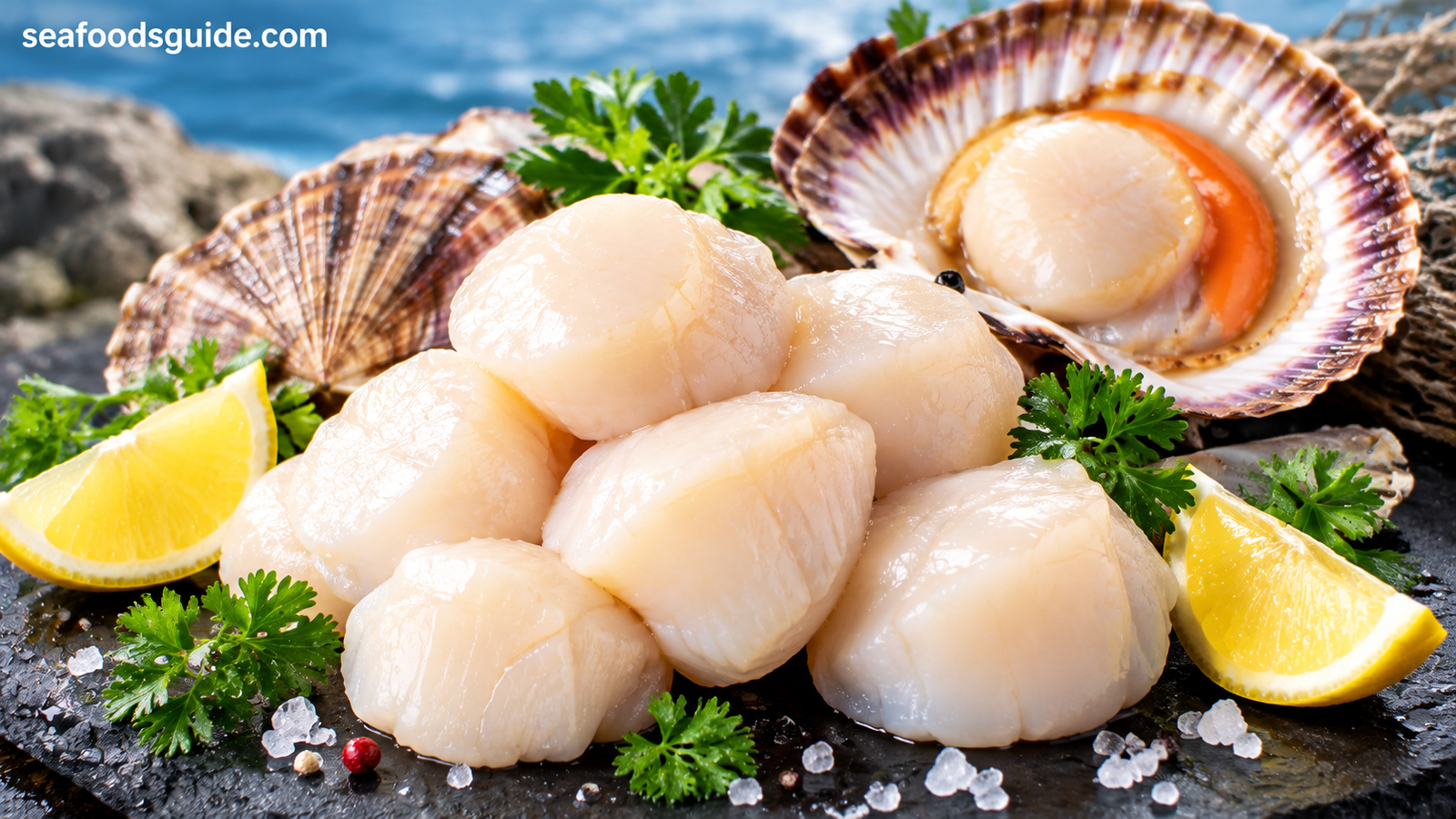
You eat the adductor muscle—the round, white disc that holds the shell closed. Most sea scallops are shucked shortly after harvesting, so markets in the U.S. typically sell only this muscle. Some chefs also enjoy the orange or pink roe, known as coral, which frequently appears in European cuisine.
A scallop has two fan-shaped shells, hinges, a large adductor muscle, a soft mantle, and a ring of small eyes. The shell protects the body. The muscle powers movement. The mantle lines the edge of the shell and holds the eyes.
How Scallops Swim and See
Scallops swim by clapping their shells together. Each clap propels water, allowing the animal to dart away from danger, such as a starfish. Oysters and clams cannot do this.
Scallops also have limited vision. Thousands of tiny eyes line the edge of the mantle, detecting light and movement. They do not produce sharp images, but they warn the scallop that a predator is nearby.
Where Scallops Live
Scallops live on the ocean floor in both cold and warm waters worldwide. Bay scallops prefer shallow, sheltered waters and seagrass beds. Atlantic sea scallops live offshore on sandy bottoms, in a range extending from the Mid-Atlantic to the U.S.-Canada border.
Their life cycle begins with eggs. NOAA notes that a female sea scallop can release hundreds of millions of eggs in a year, typically in late summer or early autumn. The larvae swim in the water and then settle at the bottom; they grow from these small forms into large, harvestable adults.
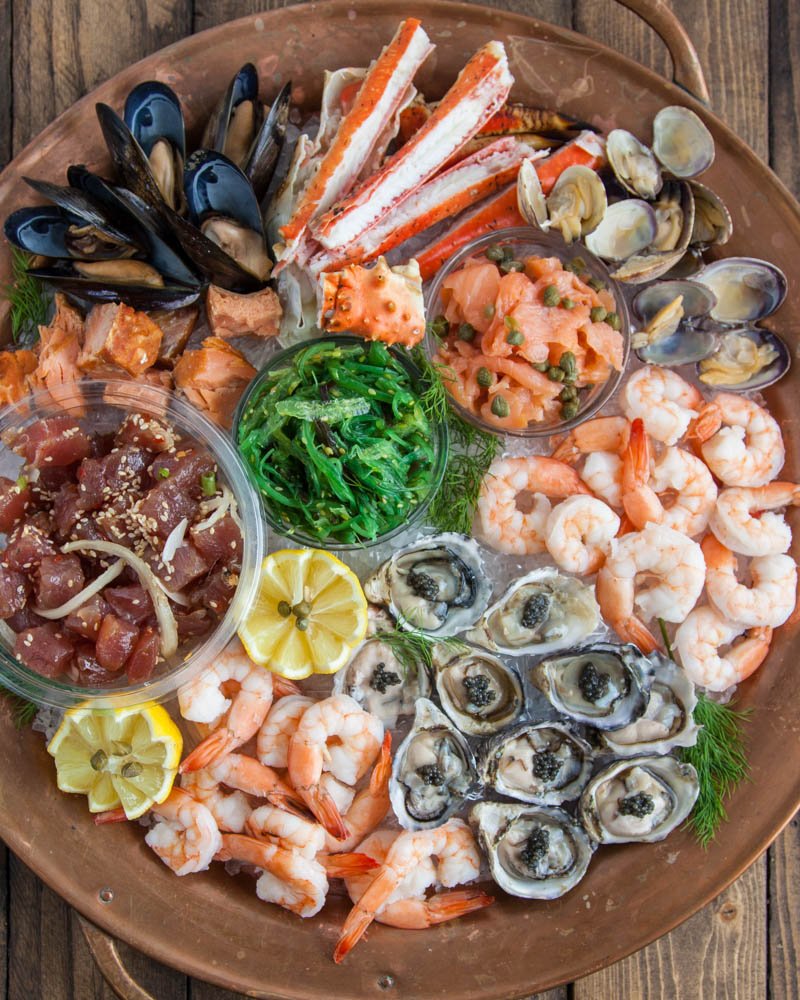
The main types of scallops sold in the United States are Atlantic sea scallops, bay scallops, calico scallops, and weathervane scallops. Sea scallops are large and meaty. Bay scallops are small and very sweet. Calico scallops are small with a mild flavor, while weathervane scallops are the large variety found in the Pacific Ocean.
Atlantic Sea Scallops
*Placopecten magellanicus* is the scallop most Americans are familiar with. It is large and firm, and is sold year-round. NOAA manages the fishery from the Mid-Atlantic to the Canadian border, and it produces the majority of the country’s harvested scallops. Their size makes them ideal for a hard sear.
Bay Scallops
*Argopecten irradians* is a small scallop prized along the Northeast coast. It is very sweet and tender, cooking in about a minute or two. Availability is seasonal, and the price per pound is usually higher than that of sea scallops. Use a quick, hard sear or prepare them in a light sauce.
Calico, Weathervane, and Imported Scallops
Calico scallops (*Argopecten gibbus*) inhabit warmer waters ranging from the Mid-Atlantic to the Gulf of Mexico. Their flavor is relatively neutral, making them suitable for chowders and pasta dishes.
Weathervane scallops (*Patinopecten caurinus*) are found between Alaska and Oregon. They can exceed three inches in width, with fewer than ten making up a pound of meat. You will also find Japanese scallops and other large imported varieties at specialty markets.
Buying tip: Names vary. Ask your fishmonger about the specific variety and where it was caught.
Scallops taste sweet, lightly salty and buttery. Fresh scallops do not taste fishy. The flavor is clean and delicate, closer to sweet crab or lobster than to salmon or tuna. A light ocean note comes through, and it quickly disappears once the scallop meets a warm bun.
Two things create that sweetness. Scallop muscle stores glycogen, a natural sugar, and it also contains savory amino acids that deliver umami. When you sear scallops, Maillard browning adds a caramel and nutty edge to the crust.
Texture matters as much as taste. Properly cooked scallops feel tender, moist and slightly springy, with a soft, almost silky center. Overcooked scallops become tough and rubbery, often within a minute or two of being done.
Sea and bay scallops differ slightly. Sea scallops are meaty and firm, with a deep sweetness and enough surface area to build a golden crust. Bay scallops are softer and more delicate, and they carry the strongest sweetness of the bunch.
Quality control: Fresh scallops smell like clean seawater. A sour or ammonia smell means you shouldn’t buy or eat them.
A 3-ounce serving of cooked scallops has about 94 calories and 17 grams of protein, with almost no fat. That makes scallops one of the leanest, protein-packed seafood you can buy. They also deliver vitamin B12, selenium, zinc, and phosphorus.
| Nutrient (3 oz cooked) | Approximate amount |
|---|---|
| Calories | 94 |
| Protein | 17 g |
| Fat | 1 g |
| Key minerals and vitamins | Selenium, vitamin B12, zinc, phosphorus, magnesium |
Why the numbers differ online: Raw and cooked scallops weigh differently, and serving sizes vary. Butter and oil add calories quickly. A baked scallop recipe can reach several times the simple figure, so check USDA FoodData Central for exact values.
Health Benefits of Scallops
Scallops offer lean protein that helps you feel full, which supports weight management. Selenium supports thyroid function and works as an antioxidant. Vitamin B12 supports nerve health and red blood cell production, and phosphorus and zinc support bones and immune function. NOAA also describes scallops as a good source of low-fat protein.
Keep the cooking simple. A little oil or butter keeps the dish light and lets the scallop do the work.
Risks and Who to Watch Out For
Shellfish allergy: Anyone with a shellfish allergy should avoid scallops altogether.
Sodium: Soaked scallops are soaked in a sodium solution, which raises the sodium and lowers the flavor. Dried scallops avoid this.
Raw scallops: Pregnant women, older adults, young children, and people with weakened immune systems should eat fully cooked scallops.
Mercury: The FDA ranks scallops among the lowest-mercury options, so most adults can eat them regularly.
Scallops are sweeter and softer than shrimp, and meatier than oysters. Scallops and oysters are both bivalve molluscs. Shrimp are crustaceans, closer to crabs and lobsters. That difference in biology explains most of the differences in taste, texture, and cooking.
Scallops vs Shrimp
Choose scallops for a buttery, tender bite and a golden crust. Choose shrimp for a smooth texture, lower cost and easier cooking. Both are lean and quick to cook.
| Feature | Scallops | Shrimp |
|---|---|---|
| Group | Mollusk (bivalve) | Crustacean |
| Taste | Sweet, buttery | Mildly sweet, savory |
| Texture | Tender, silky | Firm, snappy |
| Protein (3 oz cooked) | About 17 g | About 20 g |
| Typical cost | Higher | Lower |
| Cooking window | Very short, easy to overcook | Short, more forgiving |
Figures are approximate, so check USDA FoodData Central for exact values.
Scallops vs Oysters
Scallops are firm and juicy, while oysters are mild, salty, and often eaten raw. Both are filter-feeding bivalves, but you eat different parts. With scallops you eat the muscle. With oysters you eat the whole soft body.
Cooks use them differently. Scallops are suitable for searing, grilling, and roasting. Oysters are suitable for serving raw, grilled in the shell, fried and stewed. Oysters are especially rich in zinc, while scallops offer more protein per serving.
Safety note: The FDA warns that raw oysters can carry Vibrio bacteria. Scallops are almost always cooked in American cuisine, which alleviates that concern.
Most scallops sold in the United States are wild-caught from the Atlantic, with a smaller but growing share being farmed. NOAA calls the U.S. Atlantic sea scallop fishery the largest wild scallop fishery in the world. In 2024, it got 21.2 million pounds of scallop meat worth $332 million.
Wild Scallop Fishing and Sustainability
Ships from Massachusetts, New Jersey, Rhode Island, and Virginia land most of the U.S. crop. Crews primarily use dredges, with trawl gear being used to a lesser extent in the Mid Atlantic. Divers harvest a small number by hand, and that catch is sold as dive scallops.
The fishery has a history of recovery. NOAA declared sea scallops overfished in 1997, and managers closed large areas of the Mid Atlantic soon after. Today the New England Fishery Management Council and NOAA set catch limits and rotate fishing areas, so young scallop beds can grow before boats return. Recreational harvest is not allowed in the federal sea scallop fishery.
Buying tip: Look for “wild caught, US Atlantic” on the label, or ask your fishmonger which area the scallops came from.
Scallop Farming
Farmed scallops grow in nets suspended in the water, often in lantern nets that resemble stacked levels. NOAA reports that sea scallop farming in Maine has developed for about 20 years. Farmers sow young scallops, called spat, and raise them to market size without added feed.
Farming gives chefs a different product. It supplies scallops from small to large, and NOAA notes that farmed scallops are not meant to replace the wild fishery. Climate pressure is a concern for both sources. NOAA research shows that ocean acidification and warming are slowing the growth of juvenile Atlantic sea scallops.
Buy dried scallops that look ivory or light pink, smell like clean seawater, and feel slightly sticky. Skip scallops sitting in milky or sour-smelling liquid. Dried scallops cost more per pound, but they sear better and waste less.
Dry vs wet scallops
Dried scallops are cut and packaged without additives. Soaked scallops are soaked in a sodium solution, often with a phosphate called STPP, which helps them retain water and stay white longer.
That extra water adds weight, so you pay for fluid. It also makes soggy scallops hard to brown. They steam in the pan and reduce. If getting wet is your only option, a brief soak in lukewarm water, then a thorough drying, helps.
Read the size code. Scallops are sold by quantity per pound:
U10 means less than 10 scallops per pound, the jumbo size
10/20 means 10 to 20 per pound, a common size for burning
20/30 means 20 to 30 per pound, a smaller and more affordable size
You may also see dive scallops, which are hand-harvested, and day boat scallops, which come from trips that last a single day. Ask your fishmonger for the catch date.
Fresh vs frozen scallops
Good frozen scallops can match fresh ones. Many are frozen shortly after harvest, so they hold their quality well. Choose individually frozen scallops without ice crystals or freezer burn. Thaw them overnight in the fridge, then pat them very dry. Cooking from frozen adds moisture and often leads to a soft texture.
Signs of Bad Scallops
Discard scallops that show any of these signs:
A sour, pungent, or ammonia odor
A slimy layer
Dark gray or yellow color
Dry edges or a stringy texture
Keep scallops at 40 degrees Fahrenheit or colder, and cook them within a day or two of purchase.
To prepare scallops, defrost them if frozen, remove the small muscle on the sides, and pat them completely dry. Dried scallops are brown. Steam soaked scallops. That one step decides whether you get a golden crust or a pale, rubbery bite.
Follow these steps:
Defrost safely. Place the frozen scallops in a single layer on a plate in the refrigerator overnight. Do not thaw them on the counter or in hot water.
Remove the band muscle. Look for a small, hard rectangle of tissue on the side of each scallop. Remove it with your fingers. It cooks tougher than the rest of the meat.
Wash only if necessary. Dry packed scallops rarely need it. If washing, use cold water and work quickly.
Briefly place the soaked scallops in the brine. Soak them for about 10 minutes in 4 cups of cold water mixed with 2 tablespoons of salt. This helps draw out some of the sodium solution.
Pat dry. Place scallops on paper towels, cover with more towels, and press down gently. Let them sit for a few minutes, then dry them again.
Last minute season. Add salt and pepper just before the scallops hit the pan. Salt added too early draws out moisture.
Expert tip: After drying, place the scallops on a fresh paper towel in the refrigerator, uncovered, for 15 to 30 minutes. The surface dries further, and that helps form the crust.
Keep the flavor simple. Scallops are naturally sweet, so a pinch of salt, pepper, and a dash of lemon at the end is often all they need.
Sear the scallops in a very hot skillet for 2 to 3 minutes per side. Great sea scallops need this window. Small scallops only need 1 to 2 minutes total. Scallops are done when the sides turn opaque, the center remains slightly translucent, and the meat feels firm with a soft spring.
Timing advice varies online because scallop sizes vary. Match your time to the amount per pound, and always err on the side of undercooking. Scallops continue to cook while resting.
How to Sear Scallops Step by Step
Heat the pot. Use cast iron or steel over medium high to high heat. Add a thin layer of oil with a high smoke point, such as avocado or grapeseed.
Add the scallops. Place dried scallops in the pan with space between them. Work in batches if necessary.
Leave them alone. Cook for 2 to 3 minutes without moving them, until a golden crust forms.
Flip once. Add a tablespoon of butter, then cook 1 to 2 minutes more, spooning the butter on top.
Rest briefly. Move them onto a warm plate for a minute before serving.
The FDA lists 145 degrees Fahrenheit as the safe internal temperature for seafood, but many cooks pull scallops a little earlier for a silkier center.
| Method | Time | Best for |
|---|---|---|
| Baking at 400 degrees | 8 to 10 minutes | Hands off cooking, breadcrumb toppings |
| Grilling on skewers | 2 to 3 minutes per side | Summer meals, smoky flavor |
| Poaching | 3 to 5 minutes | Delicate dishes, soups |
| Raw (ceviche, crudo) | None | Fresh, high-quality scallops only |
Use only scallops sold for raw eating, and buy from a trusted fishmonger.
Wet scallops. Moisture blocks browning, so pat them dry.
Crowded pan. Scallops steam instead of sear.
Pan too cool. The crust never forms before the center overcooks.
Moving them early. They tear and lose the crust.
Cooking too long. One extra minute can turn them rubbery.
The best scallop recipes keep things simple. Sear sea scallops and finish them with butter, garlic and lemon. Dip the bay scallops in a light paste or sauce. Wrap them in bacon for a festive bite, or thinly slice raw scallops for crust. Each of these dishes cooks up in less than 15 minutes.
Classic preparations:
Lemon garlic butter scallops: Sear, then baste with butter, garlic, and a squeeze of lemon.
Bacon-wrapped scallops: Wrap, then bake or grill until the bacon is crispy.
Scallop risotto: Sear the scallops separately and place them over creamy risotto.
Scallop paste: Fold bay or calico scallops into linguine with white wine and parsley.
Scallop ceviche: Cure thin slices in lemon juice with chili and cilantro.
What to serve with scallops: Sweet corn, mashed cauliflower, asparagus, peas and fresh vegetables balance out the richness. For wine, choose a crisp white like Sauvignon Blanc or Chablis. Their acidity cuts through the butter and matches the sweetness of the scallop.
Scallops reward small details. Buy dry packed scallops, pat them completely dry, and sear them in a very hot pan for 2 to 3 minutes per side. Choose sea scallops for a golden crust and bay scallops for quick, sweet sauces. Remember the key facts: scallops are bivalve mollusks, you eat the adductor muscle, and a 3 ounce cooked serving gives about 17 grams of protein for roughly 94 calories.
Your next step is simple. Ask your fishmonger for the species, the count per pound, and the catch area. Then cook a batch this week, starting with the garlic lemon butter method.
Looking ahead, more shoppers will turn to AI search tools for seafood answers. Trust the sources that name the species, cite NOAA and USDA data, and explain their reasoning. Cook scallops with that same care, and they will not let you down.
Seafood Restaurants Amsterdam Ultimate Seafood Guide 2026: Best Restaurants,...
+923288172216
seafoodsguide@gmail.com

We share helpful and educational content about seafood, covering various types of fish and shellfish, their benefits, and their role in global cuisine and nutrition. Our content is designed to be easy to understand and useful for anyone interested in seafood.
Subscribe to our newsletter to receive the latest informational content about seafood, including different types of fish and shellfish, their benefits, and useful guides. Enter your email to stay updated with our newest seafood articles.