

Standing at the seafood counter, most people freeze. Salmon, catfish, tilapia, crayfish… which ones are even freshwater, and does it matter for your health? It matters more than you think. This freshwater seafood guide clears up the confusion. Freshwater seafood includes fish, crustaceans, and mollusks that live in rivers, lakes, and ponds, such as catfish, tilapia, trout, carp, and crayfish. Compared to saltwater varieties, these species generally offer a milder flavor, lower mercury exposure, and a smaller environmental footprint, according to food safety researchers and nutrition experts at institutions like Harvard’s T.H. Chan School of Public Health.
By the end of this guide, you’ll know exactly which freshwater seafood to choose, how it compares nutritionally to ocean caught fish, whether it’s safe for pregnant women and children, and how to cook it well. No guesswork, just clear answers backed by real data.
Freshwater seafood refers to any fish, crustacean, or mollusk that lives and is harvested from non salty water sources such as rivers, lakes, ponds, and streams. This includes popular fish like catfish, tilapia, trout, carp, bass, and perch, along with crustaceans such as crayfish and freshwater shrimp, and even freshwater mussels.
Unlike saltwater seafood, which comes from oceans and seas, freshwater seafood spends its life in environments with far lower salinity. That difference shapes everything from taste and texture to nutritional profile and mercury exposure, topics covered later in this guide.
Freshwater seafood plays a major role in diets worldwide. According to the Food and Agriculture Organization, freshwater aquaculture now supplies a significant share of global fish consumption, particularly in Asia, Africa, and parts of the United States where inland fish farming has grown steadily.
A few things distinguish freshwater seafood from its ocean counterparts:
If you’ve ever wondered why tilapia tastes so different from cod, the answer comes down to where the fish lives. Freshwater and saltwater seafood differ in flavor, nutrition, mercury exposure, and even bone structure.
Taste and texture. Freshwater fish typically has a milder, sometimes earthy flavor with a softer texture. Saltwater fish tends to have a brinier, more pronounced “fishy” taste and firmer flesh. This happens partly because saltwater species regulate salt differently in their bodies, giving them a distinct mineral edge that freshwater fish simply doesn’t develop.
Nutrition. Both categories are excellent protein sources, but they diverge in specifics. Saltwater fish, especially fatty varieties like salmon and mackerel, generally contain higher levels of omega-3 fatty acids. Freshwater fish often provides more vitamin A, folate, calcium, and manganese, depending on the species.
Mercury exposure. This surprises a lot of people. Even though freshwater environments actually contain higher mercury concentrations than seawater, freshwater fish don’t necessarily carry more mercury in their tissue. Researchers at Duke University found that methylmercury, the toxic form that accumulates in fish, tends to bind to organic matter in freshwater, making it less bioavailable. In saltwater, it binds to chloride instead, which makes it easier for fish to absorb.
Here’s a quick comparison:
| Factor | Freshwater Seafood | Saltwater Seafood |
|---|---|---|
| Flavor | Mild, earthy | Bold, briny |
| Omega 3s | Lower to moderate | Generally higher |
| Vitamin A & folate | Often higher | Varies by species |
| Mercury in tissue | Generally lower | Can be higher in large predatory fish |
| Sourcing | Often local, farmed | Often wild caught, coastal |
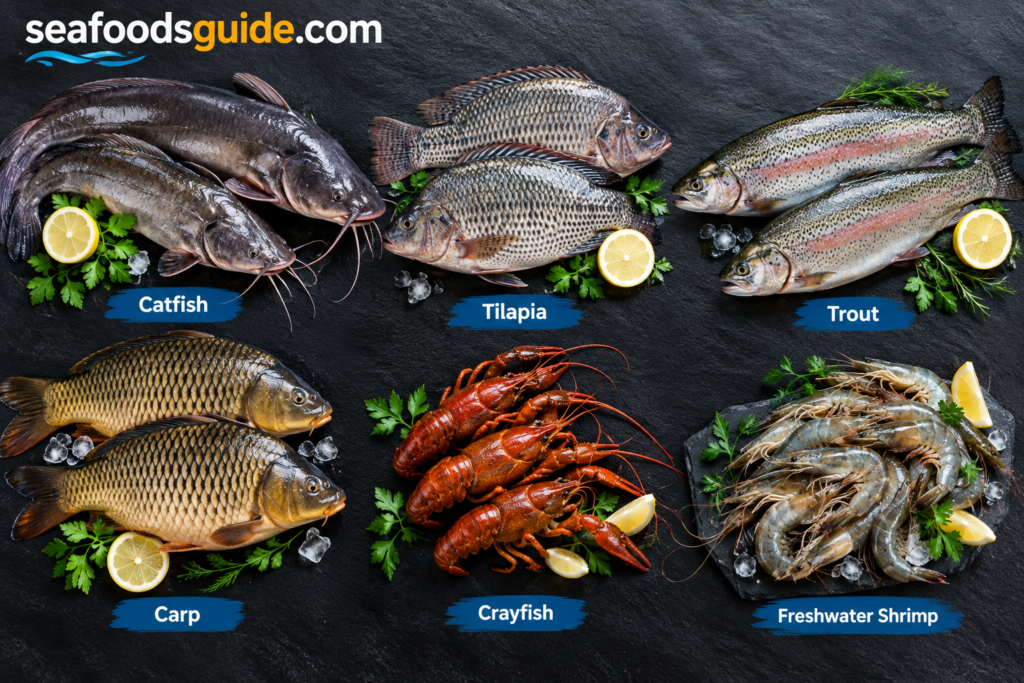
Freshwater seafood covers more variety than most people realize. It’s not just fish. The category includes crustaceans and mollusks too, each with their own flavor and culinary role.
These are the species most commonly found at grocery stores and restaurants:
This is where many guides fall short, but it’s a category worth knowing well:
Each of these species brings something different to the table, literally. Catfish and tilapia work well for beginner cooks because they’re forgiving and mild. Crayfish and freshwater shrimp shine in bold, spiced dishes. Trout and bass suit simple preparations like grilling or pan searing, where their natural flavor can stand out.
Yes, freshwater seafood is generally safe to eat, and in many cases it carries a lower mercury risk than saltwater seafood. That said, safety depends on the species, where it was sourced, and how often you eat it.
Mercury is the biggest safety concern people ask about, and the science here is genuinely interesting. Freshwater actually contains higher overall mercury concentrations than seawater. But the type of mercury that builds up in fish tissue, called methylmercury, behaves differently depending on the water chemistry. In freshwater, methylmercury tends to bind to decayed organic matter, which limits how much fish absorb into their flesh. In saltwater, it binds to chloride, which makes it far more available for fish to take in. That’s why large predatory saltwater fish like tuna, swordfish, and shark typically carry higher mercury levels than most freshwater species.
The FDA and EPA jointly publish fish consumption advisories, and most freshwater species like catfish, tilapia, and trout fall into the “best choices” or “good choices” categories, meaning they’re safe to eat two to three times per week for most adults.
For specific groups, a few notes matter:
Freshwater seafood delivers real nutritional value, and it’s not just a lower mercury alternative to ocean fish. It’s a legitimate source of high quality protein, healthy fats, and essential vitamins and minerals.
A typical 3 ounce serving of freshwater fish like catfish or tilapia provides around 15 to 20 grams of protein with relatively few calories, making it a lean protein option for muscle maintenance and general health. Trout stands out among freshwater species for having a higher omega 3 content than most of its freshwater counterparts, closer to what you’d find in some saltwater fish.
Beyond protein, freshwater seafood tends to be a strong source of:
Research published through USDA Dietary Guidelines consistently recommends at least two servings of seafood per week, and freshwater options count fully toward that recommendation. The American Heart Association echoes this guidance, noting that regular seafood consumption, freshwater included, is linked to lower rates of heart disease and cognitive decline over time.
If you want the most nutritional bang for your buck, some freshwater options clearly outperform others. Here’s how the top choices stack up, based on nutrition, sustainability, and flavor versatility.
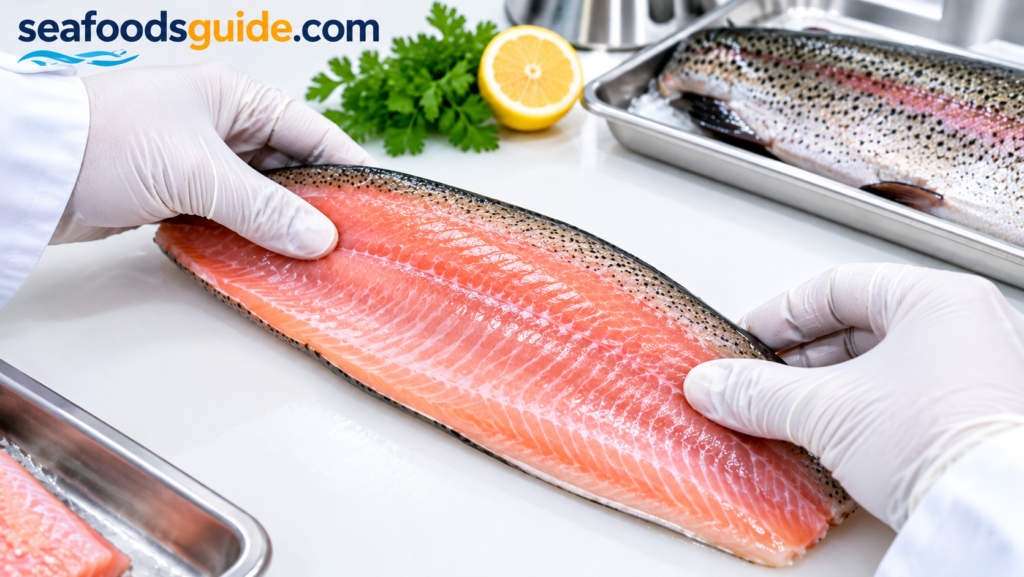
Trout ranks as the best overall pick. It offers the highest omega 3 content among common freshwater fish, a mild nutty flavor, and it’s widely available as a sustainably farmed option. Rainbow trout in particular is often listed as a “Best Choice” by Seafood Watch, the sustainability program run by the Monterey Bay Aquarium.
Catfish is a close second. It’s affordable, mild, high in protein, and one of the most widely farmed freshwater species in the United States, particularly in the South. U.S. farmed catfish also tends to have a smaller environmental footprint than many imported seafood options.
Tilapia deserves credit for versatility and price. It’s one of the most consumed fish globally, cooks quickly, and takes on seasoning well, making it a practical choice for people new to cooking seafood at home.
Crayfish and freshwater shrimp round out the list for anyone wanting variety. They’re lower in overall fat, high in protein, and work well in bold, flavorful dishes like étouffée or stir fries.
A simple way to choose:
Whichever you pick, look for farmed options certified by organizations like the Aquaculture Stewardship Council for the best combination of safety and sustainability.
Freshwater seafood’s mild flavor is actually an advantage in the kitchen. It takes on seasoning easily and works with a wide range of cooking methods, which makes it forgiving for beginner cooks and versatile for experienced ones.
Pan searing works especially well for trout and bass. A hot pan, a little butter or oil, and a few minutes per side gives you crispy skin and tender flesh without much effort. Season simply with lemon, salt, and herbs like dill or thyme to let the fish’s natural flavor come through.
Frying is the classic method for catfish, especially in Southern U.S. cooking. A light cornmeal breading and a hot oil bath produces the crispy texture people expect from a fish fry. Tilapia also fries well and cooks quickly due to its thin fillets.
Grilling suits firmer freshwater fish like carp and larger bass. Because these species hold together better under high heat, they’re less likely to fall apart on the grill compared to more delicate fillets.
Boiling is the go to method for crayfish, especially in Cajun style crab boils with spices, corn, and potatoes. Freshwater shrimp can also be quickly boiled or sautéed in garlic and butter.
A few practical tips:
Once you know the basics, putting freshwater seafood on the table becomes simple. Here are a few approachable recipes that highlight the strengths of different species.
Pan seared trout with lemon and herbs. Season trout fillets with salt, pepper, and fresh dill. Sear skin side down in butter for about four minutes, flip, and cook another two minutes. Finish with a squeeze of lemon. This dish takes under 15 minutes and showcases trout’s naturally nutty flavor without overpowering it.
Southern fried catfish. Coat catfish fillets in seasoned cornmeal, then fry in hot oil until golden and crispy, about three to four minutes per side. Serve with coleslaw and hush puppies for a classic Southern meal that highlights catfish’s mild, slightly sweet taste.
Garlic butter tilapia. Sauté tilapia fillets in a garlic butter sauce with a splash of white wine or lemon juice. Because tilapia is so mild, it absorbs the garlic and butter flavor beautifully, making it a quick weeknight dinner option.
Cajun crayfish boil. Boil crayfish with corn, potatoes, sausage, and Cajun seasoning for a hands on, flavorful meal that’s popular throughout Louisiana. This is one of the best ways to introduce freshwater crustaceans to your table.
Carp stew. In many Asian and European kitchens, carp is simmered slowly with vegetables and spices, allowing its firmer texture to hold up well in a hearty, comforting stew.
These recipes work as a starting point. Once you’re comfortable with the basic techniques from the cooking section, you can adjust seasonings and pairings based on your own taste preferences.
Freshwater seafood generally comes with a smaller environmental footprint than saltwater seafood, but sourcing still matters. Where and how your fish is raised affects both sustainability and safety.
Most freshwater seafood sold in the United States, including catfish, tilapia, and trout, is farmed rather than wild caught. Freshwater aquaculture typically requires less fuel and shorter supply chains than ocean fishing, since farms are often located close to where the fish is sold. According to the Food and Agriculture Organization, aquaculture now supplies more than half of all seafood consumed globally, with freshwater species making up a significant share of that total.
That said, not all farming practices are equal. Poorly managed fish farms can contribute to water pollution, habitat disruption, and overcrowding, which affects both fish welfare and product quality. This is where third party certifications become useful.
Look for these labels when shopping:
Wild caught freshwater seafood, like crayfish from Louisiana or wild caught catfish, can also be sustainable, but it’s worth checking regional fishing regulations, since overfishing in specific lakes or rivers remains a concern in some areas.
Freshwater seafood deserves more credit than it usually gets. It offers lean protein, valuable vitamins like A and folate, generally lower mercury levels, and a smaller environmental footprint than most saltwater options. From mild, beginner friendly choices like tilapia and catfish to nutrient dense picks like trout, there’s a freshwater option suited to almost any diet or cooking skill level.
The key takeaway from this freshwater seafood guide is simple: choose certified, responsibly sourced species, follow FDA and EPA guidance on serving frequency, and match your choice to your nutritional goals, whether that’s more omega 3s, lower mercury exposure, or an affordable everyday protein.
As consumer awareness around sustainable, low mercury protein sources continues to grow into 2026, freshwater seafood is positioned to play an even bigger role in how people eat. Next time you’re at the seafood counter, you’ll know exactly what to reach for.
Seafood Restaurants Amsterdam Ultimate Seafood Guide 2026: Best Restaurants,...
+923288172216
seafoodsguide@gmail.com

We share helpful and educational content about seafood, covering various types of fish and shellfish, their benefits, and their role in global cuisine and nutrition. Our content is designed to be easy to understand and useful for anyone interested in seafood.
Subscribe to our newsletter to receive the latest informational content about seafood, including different types of fish and shellfish, their benefits, and useful guides. Enter your email to stay updated with our newest seafood articles.