
Types of Seafood: A Complete Guide to Fish, Shellfish & Ocean Delicacies
Introduction
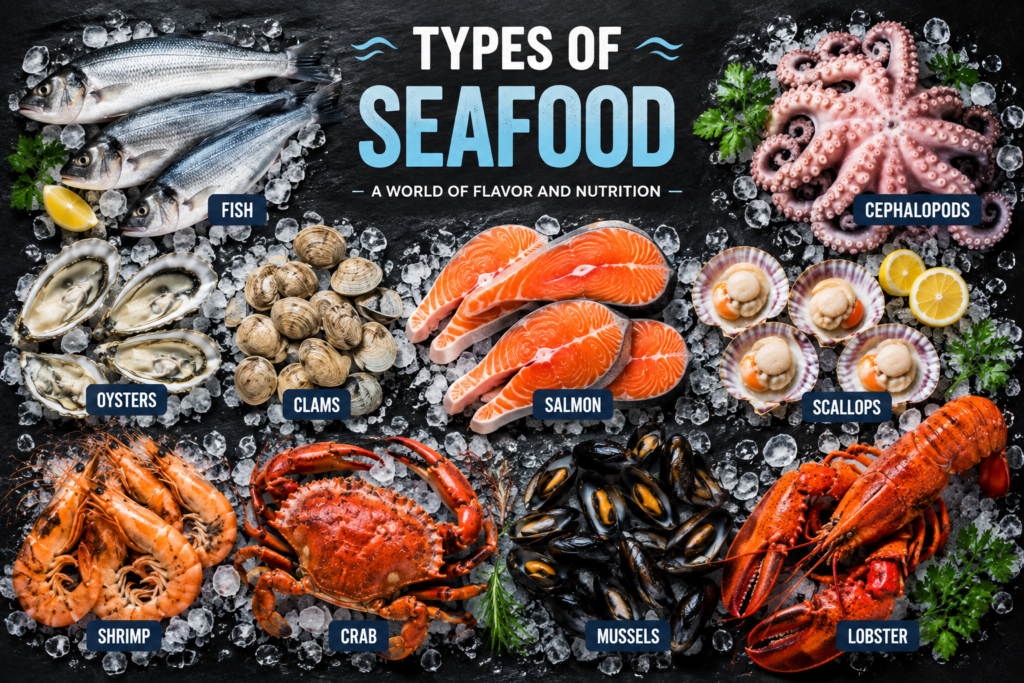
Standing at the seafood counter, most shoppers face the same problem. Rows of fish, shrimp, crab, and mussels all look similar, yet they belong to completely different categories with different tastes, textures, and health benefits. Understanding the types of seafood makes shopping, cooking, and eating out far less confusing. Seafood is a broad term for edible aquatic animals harvested from oceans, rivers, and lakes. It splits into two major groups: finfish, which includes species like salmon and tuna, and shellfish, which covers crustaceans such as shrimp and crab along with mollusks like clams and oysters. Some categories also include less common options like seaweed and roe.
This guide breaks down each major category in plain language, explains how professionals classify seafood, and highlights the nutritional differences that matter most. By the end, readers will know exactly what separates a crustacean from a mollusk, which types of seafood offer the most protein, and how to pick fresh options with confidence.
What Is Seafood?
Seafood refers to any edible aquatic animal harvested from saltwater or freshwater environments. This includes fish, crustaceans, mollusks, and certain other marine organisms that humans have eaten for thousands of years. Some definitions also extend to edible sea plants like seaweed, though the core meaning centers on animal life pulled from oceans, rivers, and lakes.
The term covers two broad origins:
- Saltwater seafood, sourced from oceans and seas, including tuna, salmon, and lobster
- Freshwater seafood, sourced from rivers and lakes, including catfish, trout, and crawfish
Main Categories of Seafood
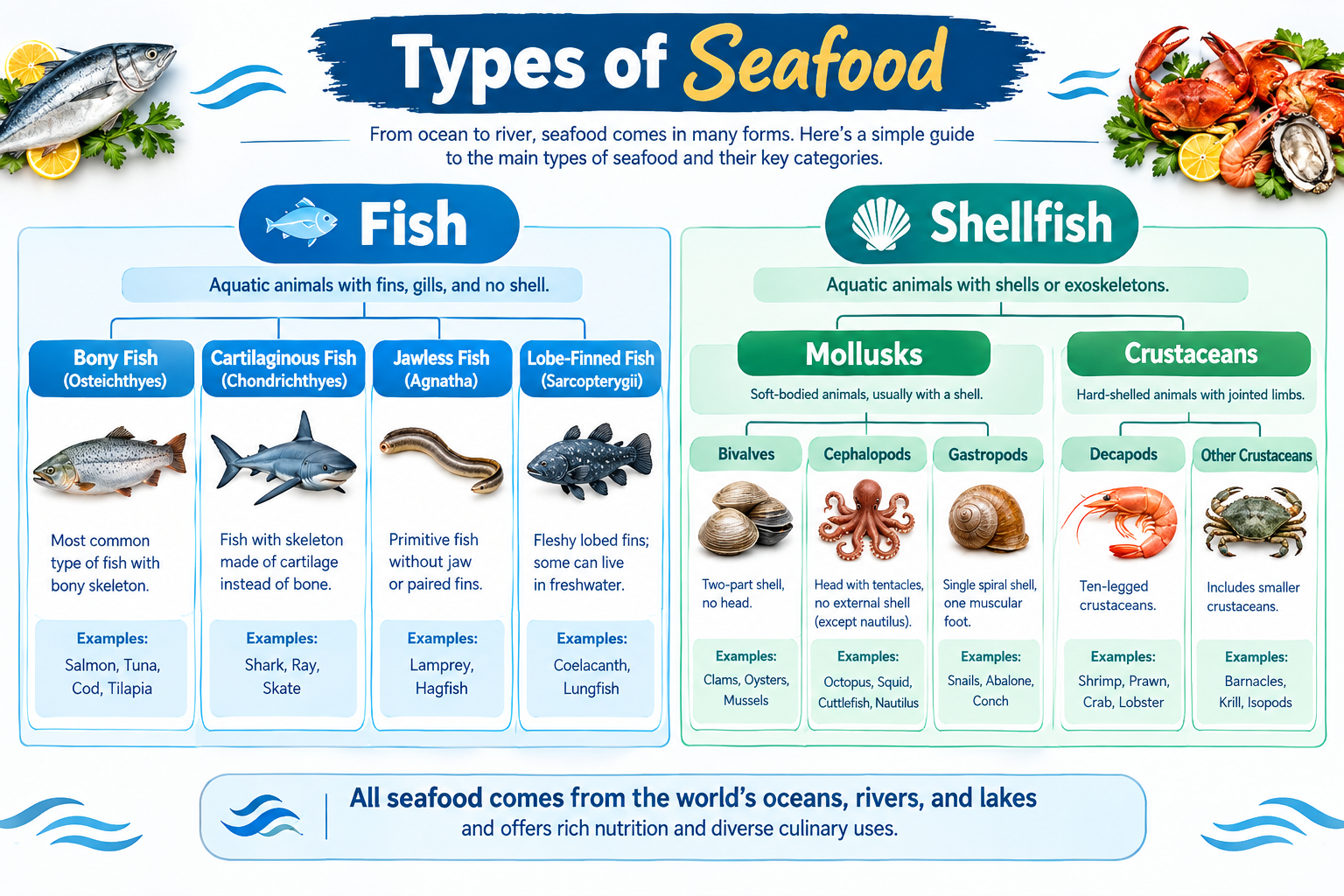
Understanding seafood becomes simple once you divide it into just 2 major categories: Fish and Shellfish. These two categories differ significantly from one another in terms of body structure, habitat, and nutritional profile.
Fish are aquatic animals that have a backbone (spine), gills for breathing, and fins for swimming. They are found in both freshwater (rivers, lakes) and saltwater (oceans, seas) environments. Examples: salmon, tuna, cod, and trout.
Shellfish are aquatic animals that do not have a backbone, but instead have an exterior shell or exoskeleton that protects their soft body. Shellfish are further divided into 2 sub-groups:
- Crustaceans, which have a hard exoskeleton, such as shrimp, crab, and lobster
- Mollusks, which have soft bodies, either with or without a shell, such as oysters, clams, squid, and octopus
Types of Fish
Saltwater Finfish
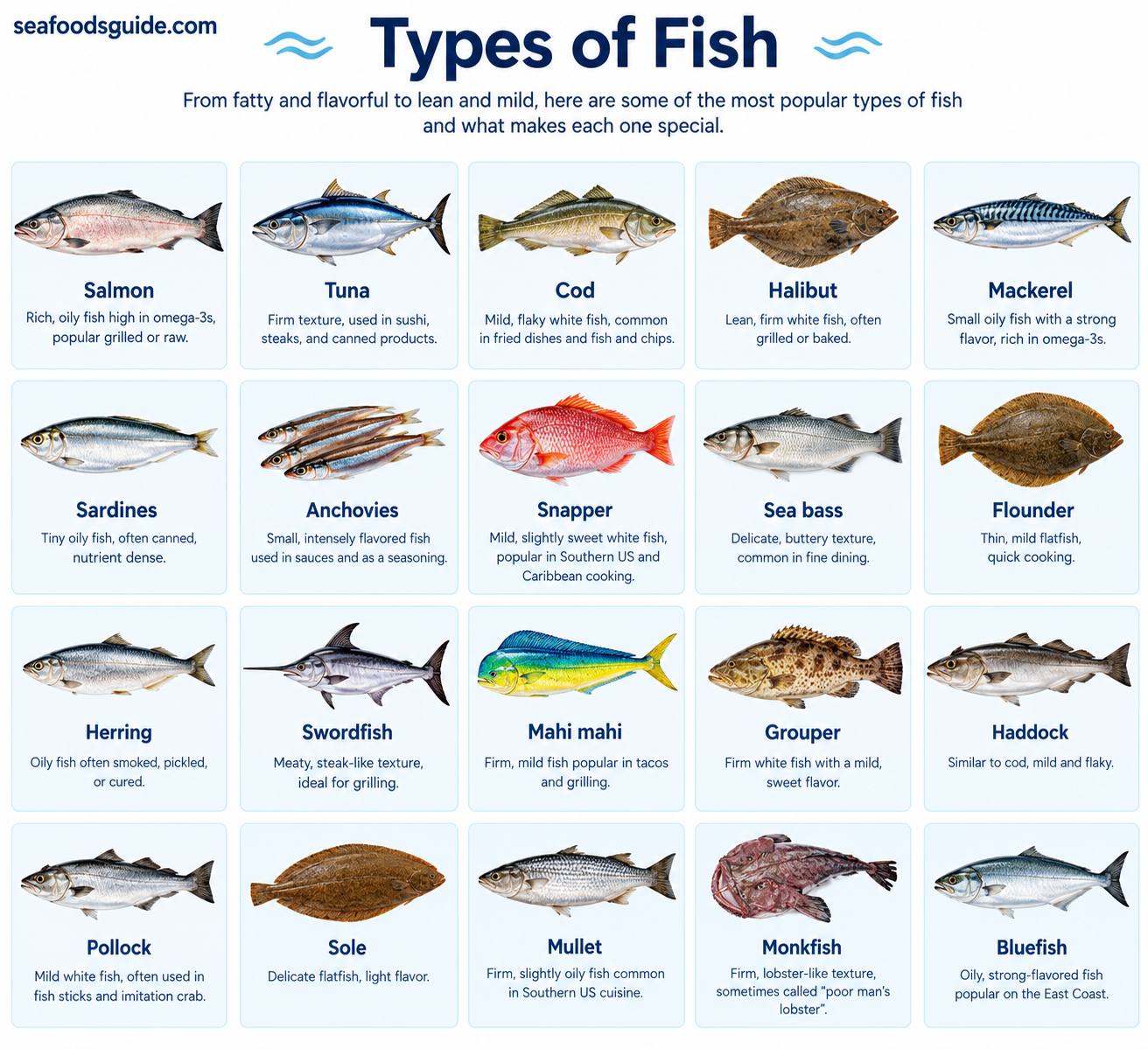
- Salmon – rich, oily fish high in omega-3s, popular grilled or raw
- Tuna – firm texture, used in sushi, steaks, and canned products
- Cod – mild, flaky white fish, common in fried dishes and fish and chips
- Halibut – lean, firm white fish, often grilled or baked
- Mackerel – small oily fish with a strong flavor, rich in omega-3s
- Sardines – tiny oily fish, often canned, nutrient dense
- Anchovies – small, intensely flavored fish used in sauces and as a seasoning
- Snapper – mild, slightly sweet white fish, popular in Southern US and Caribbean cooking
- Sea bass – delicate, buttery texture, common in fine dining
- Flounder – thin, mild flatfish, quick cooking
- Herring – oily fish often smoked, pickled, or cured
- Swordfish – meaty, steak-like texture, ideal for grilling
- Mahi mahi – firm, mild fish popular in tacos and grilling
- Grouper – firm white fish with a mild, sweet flavor
- Haddock – similar to cod, mild and flaky
- Pollock – mild white fish, often used in fish sticks and imitation crab
- Sole – delicate flatfish, light flavor
- Mullet – firm, slightly oily fish common in Southern US cuisine
- Monkfish – firm, lobster-like texture, sometimes called “poor man’s lobster”
- Bluefish – oily, strong-flavored fish popular on the East Coast
Freshwater Finfish
- Tilapia – mild, affordable, widely farmed
- Catfish – mild flavor, popular fried in Southern US cuisine
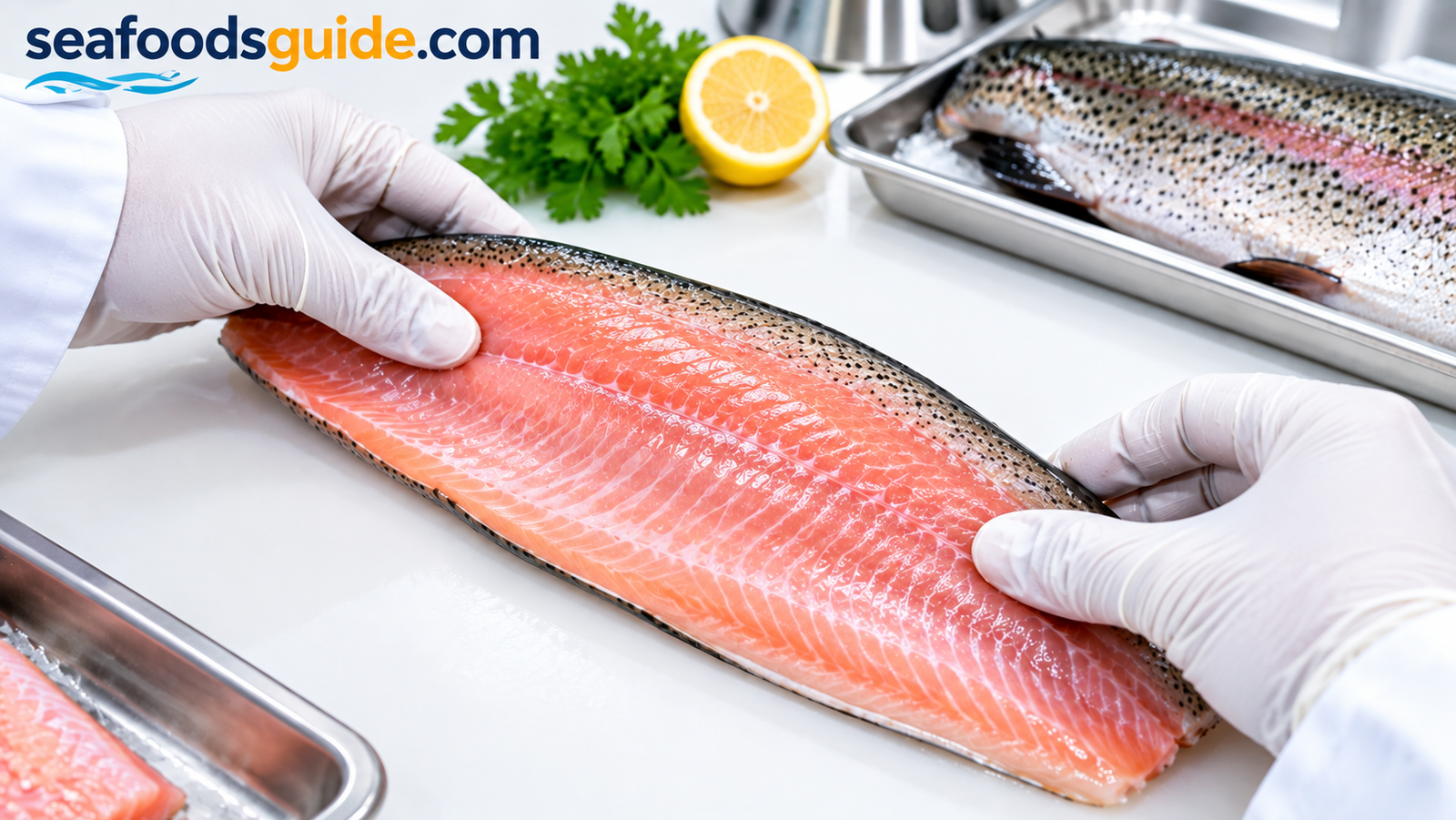
- Trout – delicate flavor, similar to salmon but milder
- Bass – includes largemouth, smallmouth, and striped bass, firm and mild
- Carp – firm texture, common in Asian and Eastern European cuisine
- Perch – small, mild, flaky freshwater fish
- Pike – lean, firm fish with a slightly gamey flavor
- Walleye – mild, flaky, popular in the Midwest US
Fish Grouped by Fat Content (For the Nutrition Section)
Oily fish (higher omega-3 content):
Salmon, mackerel, sardines, herring, tuna, anchovies, bluefish
Lean white fish (mild flavor, minimal fat):
Cod, tilapia, haddock, sole, flounder, halibut, grouper, pollock
Types of Shellfish
Crustaceans
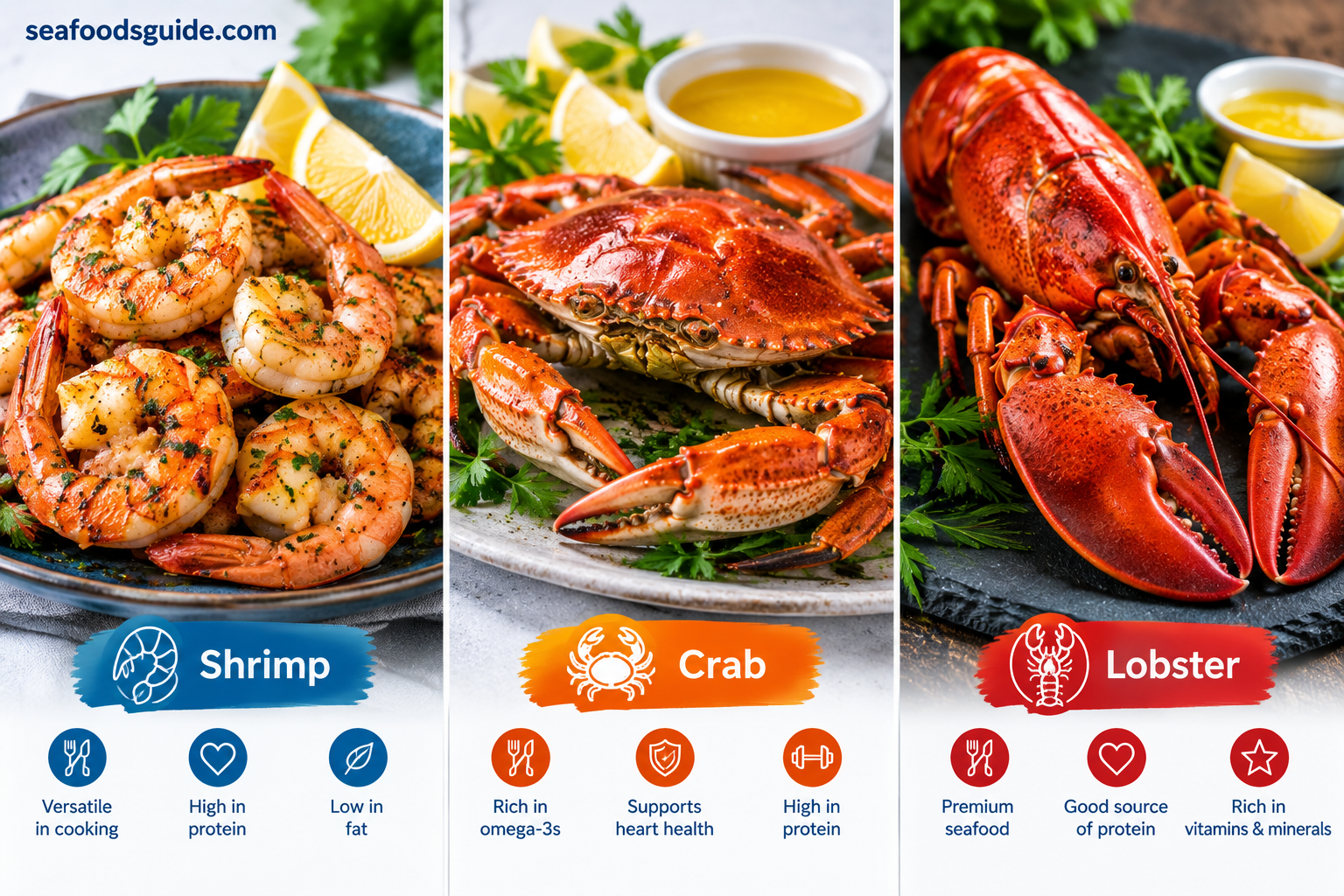
- Shrimp – small, versatile, quick cooking, the most consumed shellfish in the US
- Prawns – larger relative of shrimp, often used interchangeably in recipes
- Crab – includes several popular varieties:
- Blue crab – common in East Coast crab cakes and boils
- King crab – large, sweet leg meat, often steamed or grilled
- Snow crab – delicate, slightly sweet meat, popular steamed
- Dungeness crab – West Coast favorite, sweet and tender
- Stone crab – claws harvested sustainably, served chilled
- Lobster – premium shellfish known for tender tail and rich claw meat
- Crawfish (crayfish) – small freshwater crustacean, staple in Southern US boils and étouffée
- Krill – tiny shrimp-like crustaceans, mostly used in supplements and as fish feed, occasionally eaten directly in some cuisines
Mollusks: Bivalves
- Clams – includes littleneck, cherrystone, and razor clams, eaten steamed, raw, or in chowder
- Oysters – eaten raw on the half shell or cooked, valued for briny flavor and zinc content
- Mussels – often steamed in wine or broth, quick cooking and affordable
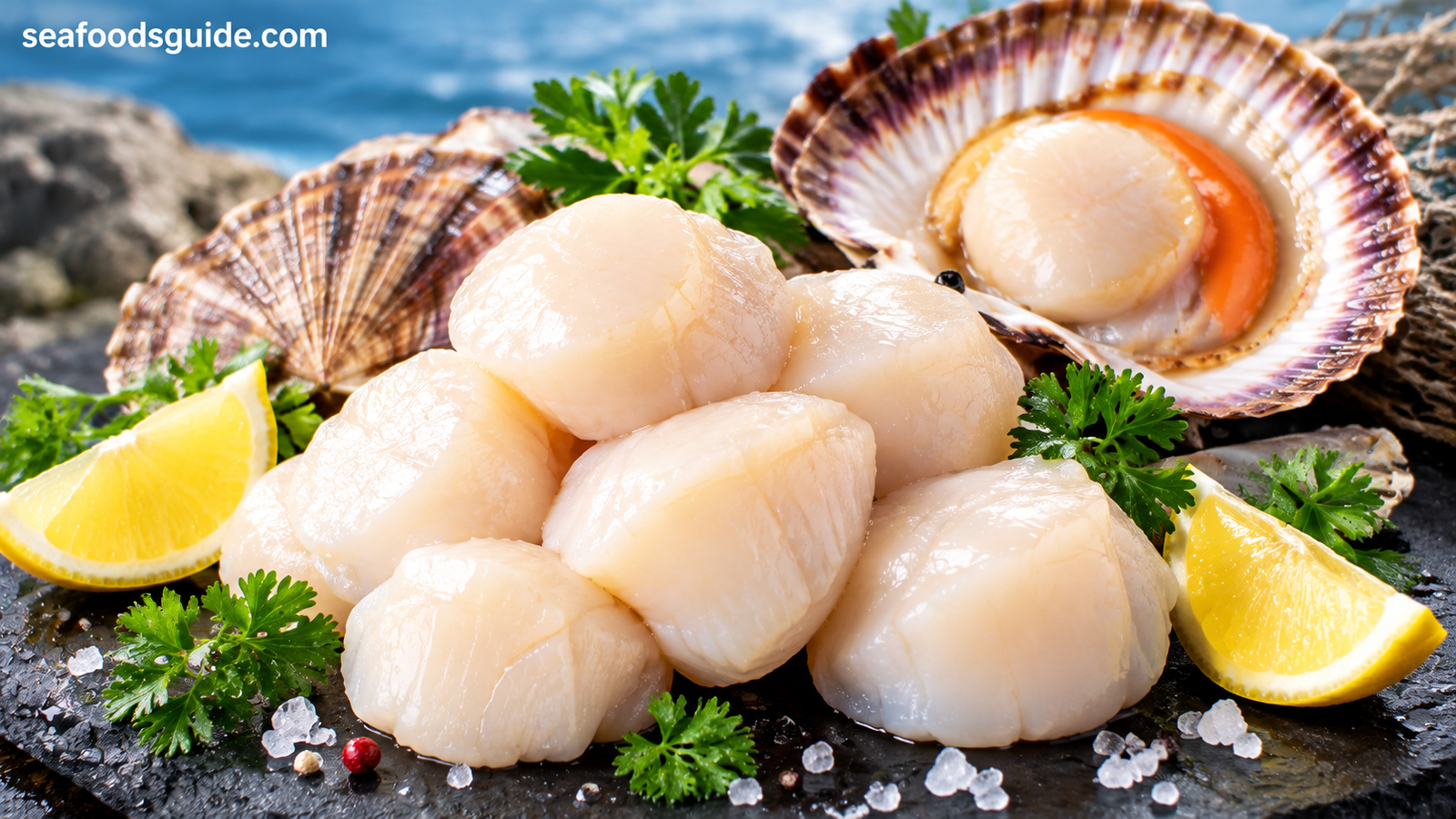
- Scallops – firm, sweet meat, popular seared; includes sea scallops and bay scallops
Mollusks: Cephalopods
- Squid – mild flavor, chewy texture, often served as calamari
- Octopus – requires careful cooking to become tender, popular grilled or braised
- Cuttlefish – similar to squid, common in Mediterranean and Asian cuisine
Mollusks: Gastropods
- Abalone – a prized sea snail with firm, chewy meat, considered a delicacy
- Conch – large sea snail popular in Caribbean cooking, often used in fritters and salads
- Sea snails (whelks) – less common in the US but widely eaten in European and Asian cuisine
How to Choose the Right Type of Seafood
With so many types of seafood available, choosing the right one often comes down to matching your goals, whether that’s nutrition, budget, cooking skill, or personal taste, to the right category.
If you’re focused on health goals:
- For heart health, choose oily fish like salmon, mackerel, or sardines for their high omega-3 content
- For weight management, lean options like cod, shrimp, and tilapia offer high protein with minimal fat
- For mineral intake, oysters and mussels provide some of the highest zinc and iron levels among all seafood
If you’re working with a budget:
- Tilapia, catfish, and canned tuna are among the most affordable options year round
- Frozen shrimp often costs less than fresh and works just as well in most recipes
- Mussels and clams tend to be cheaper than lobster or crab while still offering rich flavor
If you’re new to cooking seafood:
- Start with mild, forgiving options like tilapia, cod, or shrimp, which are hard to overcook badly
- Avoid octopus or squid at first, since these require specific techniques to avoid a rubbery texture
- Pre-cooked shrimp or canned salmon are good low-risk starting points
If sustainability is a priority:
- Look for wild caught labels on species with healthy population levels, such as Alaskan salmon or Pacific cod
- Farmed options like tilapia and catfish often have a lower environmental footprint than some wild caught species
- Checking for certifications like MSC (Marine Stewardship Council) can help confirm responsible sourcing
If you’re cooking for a specific dish:
- Firm fish like tuna, swordfish, or halibut hold up well on the grill
- Delicate fish like sole or flounder work best baked or pan seared
- Shellfish like shrimp, crab, and mussels are ideal for pasta dishes, boils, and quick weeknight meals
Popular Seafood Dishes by Type
Different types of seafood shine in different dishes, and knowing which pairing works best can make cooking far less intimidating.
Finfish Dishes:
- Grilled salmon with lemon and herbs, a simple weeknight staple
- Fish and chips, traditionally made with cod or haddock
- Tuna poke bowls, featuring raw, marinated tuna over rice
- Blackened tilapia, popular in Cajun and Southern US cooking
- Sushi and sashimi, showcasing raw tuna, salmon, and yellowtail
Crustacean Dishes:
- Shrimp scampi, sautéed in garlic butter and white wine
- Crab cakes, a Maryland classic made from lump crab meat
- Lobster rolls, chilled or buttered lobster meat served in a bun
- Crawfish boil, a Southern tradition combining crawfish, corn, and potatoes
- Garlic butter shrimp skewers, common at grilling and barbecue events
Mollusk Dishes:
- Oysters on the half shell, served raw with mignonette or lemon
- Steamed mussels, cooked in white wine, garlic, and herbs
- Clam chowder, a creamy New England classic
- Calamari, lightly breaded and fried squid rings
- Grilled octopus, often served with olive oil and paprika in Mediterranean cuisine
Mixed Seafood Dishes:
- Seafood paella, combining shrimp, mussels, and sometimes squid with saffron rice
- Cioppino, an Italian American seafood stew with fish, shellfish, and tomato broth
- Seafood boil, mixing shrimp, crab, crawfish, corn, and sausage in one pot
- Bouillabaisse, a French seafood stew featuring multiple fish and shellfish varieties
Frequently Asked Questions About Types of Seafood
What is considered seafood?
What are the main types of seafood?
What is the difference between shellfish and finfish?
What is the difference between saltwater and freshwater seafood?
Which seafood has the most protein?
Which seafood has the most omega-3?
What is the healthiest type of seafood to eat?
Which seafood is best for beginners to cook?
Is seaweed considered seafood?
How do you know if seafood is fresh?
Conclusion
Seafood covers a far wider world than most people realize, spanning finfish, crustaceans, mollusks, and lesser known options like sea urchin and seaweed. Understanding the different types of seafood makes grocery shopping easier, helps home cooks choose the right preparation method, and supports smarter decisions around nutrition and freshness.
Each category brings something unique to the table, whether it’s the omega 3 richness of salmon, the lean protein of shrimp, or the mineral density of oysters. Knowing how seafood is classified also helps explain differences in allergies, storage needs, and cooking techniques across categories.
Related Blog
Related Blog & Article
Seafood Restaurants Amsterdam
Seafood Restaurants Amsterdam Ultimate Seafood Guide 2026: Best Restaurants,...